How Communities Adapt to Life with Limited Access to Essential Resources
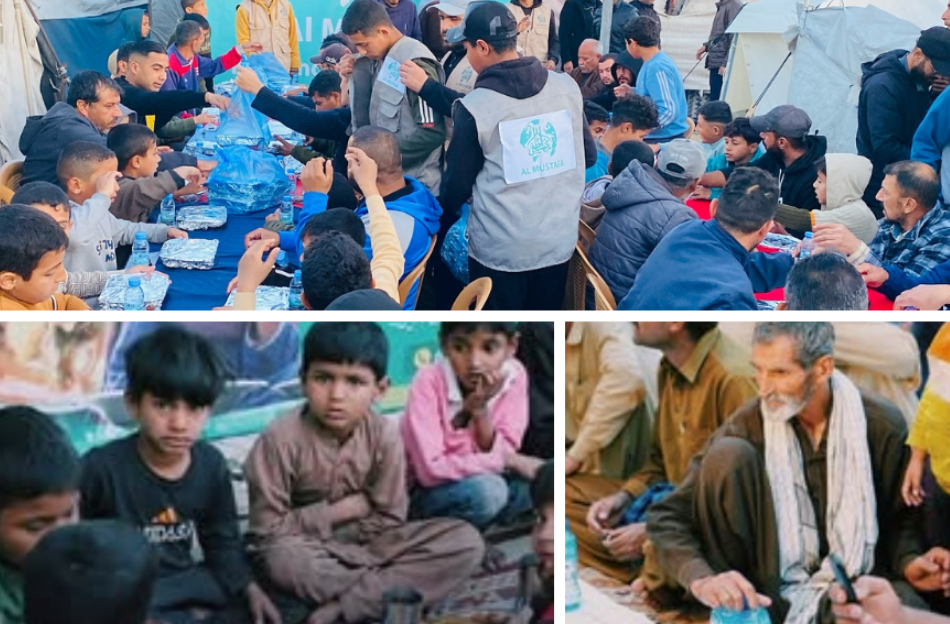
For a lot of families the morning opens with logistics. Water first. Is there enough food. Someone unwell and the clinic half a day away. These aren’t crises. This is just how the day starts, every day, for hundreds of millions of people who aren’t temporarily in a hard situation but are just permanently in one.
Most of them aren’t waiting. They’re busy figuring it out with whatever they have and whoever they know.
That’s the actual subject here.
Water Is Usually Where Everything Starts
In dry regions, getting water is the first task of the day. Before school, before cooking, before anything. Women and children walk to rivers, shared wells, or whatever source is closest. Sometimes what they find is not clean. They use it anyway because there is no other option.
The responses communities have built around this are mostly practical and low-tech.
Rainwater collection is the most common. Families put containers under roof edges. Some have built brick tanks. Some use large plastic drums. When rain comes, they catch what they can and store it carefully. In dry months, that stored water carries the household through.
Shared wells have been dug by communities working together. Not contractors, not outside organizations. Neighbors, taking turns, over weeks. Once done, they set rules about use. They collect small contributions from each household to cover repairs. A rope, a new bucket, a replacement part. The well belongs to everyone who helped dig it, and that matters. Things that communities build together tend to get looked after. Things that are handed to them often do not.
Mesh screens on hillsides catching fog and draining it into containers. Parts of Morocco, Chile, Eritrea have been doing this for a long time in coastal areas where humidity is there but rain isn’t. First reaction is that it can’t possibly work at any useful scale. It does.
The pattern that holds across most successful water solutions is shared ownership and local management. When a water committee sets the rules, collects fees, and handles repairs, systems keep running. When an outside group manages everything and then leaves, systems tend to stop running not long after.
That is not a theory. It is just what the evidence shows across a lot of different countries and a lot of different project types. A well the community dug stays a community’s well. A well handed over by a project team becomes somebody else’s problem when it breaks. The simplest intervention that holds up over time is often just building a water well the community owns from day one. That and making sure local people can run it themselves before whoever came in from outside has left.
Food When the Market Is Far or Too Expensive
Kitchen gardens show up in almost every low-income community, everywhere. A small patch near the house. Tomatoes along a wall. Greens in old containers. Root vegetables in whatever soil is available. It does not replace buying food. But it reduces what the family needs to spend, adds nutrition, and in tight months makes a real difference.
Seed saving is something many farming families never stopped doing. At harvest, they set aside the best seeds for next year. They trade with neighbors. One household might have a bean variety that handles dry spells well. Another has a maize type that resists a local pest. Sharing those seeds builds a local supply that no shop can offer and that does not disappear when prices rise or roads flood.
Food sharing between neighbors happens in most close communities without anyone organizing it. A good harvest means food gets shared quietly. Extra fish gets split. A big pot of something gets sent to a few households. None of this follows a system. It just happens because people know each other and that is how things work.
Preserving food without power isn’t a lost art. Drying fish in the sun. Still happening. Still working. Smoking meat. Fermenting grains. Pickling vegetables. These methods let families store food for weeks or months without power. They are not romantic traditions. They are practical tools that many communities still use every day because they have to.
Healthcare When the Clinic Is Half a Day Away
This is where things get genuinely harder. Water and food have local solutions. Serious illness needs medicine and trained people, and those are harder to produce locally.
Traditional medicine is the first option for most families living far from formal health services. Herbal treatments, plant remedies, knowledge passed from older relatives. It handles a lot of the everyday problems, fevers, infections, minor wounds, stomach issues. It is not a substitute for surgery or anything serious. But for day-to-day health problems, it does real work and it is available immediately without transport costs.
Community health workers are probably the most effective thing that has come out of resource-poor health systems. These are local people who receive basic training and then work in their own villages or neighborhoods. They monitor pregnancies. They treat simple infections. They vaccinate children. They recognize when someone needs to go to a proper facility and they help that happen.
What makes them effective is not just the training. It is that they already live there. They know which family has a new baby. They know which elderly person has been struggling. Nobody needs to explain who they are. People talk to them honestly because of that, not because of any program design or communication strategy.
Ethiopia built a large network of these workers over two decades. Bangladesh did something similar. Both countries saw child death rates drop meaningfully as a result. The model is not complicated. It puts trained people where the problems actually are, and that kind of community health work in underserved areas is still the closest thing to a reliable answer the field has found.
Mobile clinics travel set routes and stop at remote communities on scheduled days. A nurse or doctor sees patients, dispenses medicine, does check-ups, and moves on. It is not the same as a permanent facility. But for communities with no access at all, it is significantly better than nothing.
Phone-based health advice has grown in areas with basic mobile coverage. A patient calls, describes what is happening, gets guidance. It is limited. For people who can’t travel and have nobody trained nearby, that gap doesn’t fill itself. This at least partially does.
No Power, So What Happens When the Sun Goes Down
Without electricity, the day ends with the light. Children cannot study. Adults cannot work after dark. Small businesses close earlier than they need to. If someone gets sick at night, it is harder to see, harder to act, harder to get anywhere.
Small solar setups have changed this for a lot of communities. Not large systems. Just a panel, a battery, a few lights. That is enough to study in the evening. Enough to charge a phone. Enough to keep a small business running for a few more hours. The cost of these basic kits has dropped significantly over the past decade and they are now within reach of household budgets that would not have managed them before.
Community charging stations have appeared in some villages where one person with a larger solar setup charges a small fee for neighbors to plug in. The person running the station earns something. Neighbors get charged phones and devices. It is simple and practical and nobody had to plan it from the outside.
Biogas works well for farming families with livestock. Animal waste goes into a sealed underground tank. As it breaks down it produces gas. That gas gets piped to the kitchen for cooking. Once the system is set up it costs almost nothing to run. Families use less firewood. Women and children spend less time collecting it. Indoor air quality improves because open fires produce a lot of smoke.
Improved cookstoves are a smaller change but a consistent one. Open fires go through wood fast and fill the room with smoke. Over time that smoke does real damage to lungs. A clay stove designed properly uses less wood, directs heat where it’s needed, keeps more smoke out of the living space. Less time collecting firewood. Better air inside the house. Nothing dramatic about it. Just genuinely useful every day it gets used.
Keeping Children Learning When Schools Are Far or Few
Parents in under-resourced communities want their children educated. This does not need arguing. Parents without much schooling themselves are often the ones pushing hardest for their kids to get it. The problem is never that they don’t care. It’s that the school is a long walk down a road that isn’t safe for a young child alone. It’s that the farm or the household doesn’t run without that child’s help and there aren’t enough adults to cover it. It’s eleven dollars for a uniform that isn’t there. It’s one teacher, eighty students, several grades, one room.
Communities have responded by creating learning spaces themselves. A parent with more education teaches in their home. A church or community hall opens on weekends for extra classes. Older students help younger ones after the school day ends. None of these are formal or officially recognized. But children are reading and doing arithmetic who would not be otherwise.
Radio education has existed in parts of Africa and Latin America for decades before anyone was talking about distance learning. A teacher broadcasts a lesson. Students in remote areas listen and follow along with printed sheets. It works without the internet, without devices, without anything beyond a basic receiver. Some of these programs have been running for twenty or thirty years.
Women Carry Most of This and Often Lead It
In almost every community with limited resources, women are managing the daily reality. Collecting water. Growing food. Preparing meals. Caring for sick relatives. Stretching whatever money comes in across everything it needs to cover.
And in many communities, women have also organized formal structures to support each other.
Savings groups are common across South Asia, sub-Saharan Africa, and parts of Latin America. A group of women, sometimes ten, sometimes more, agree to each contribute a fixed small amount every week. The collected money gets lent to one member at a time, rotating through the group. No bank is involved. The only paperwork is what the group produces itself. No outside oversight, no formal management structure. Members have bought livestock with it, covered medical costs, paid school fees, started small income generating activities. It keeps working because the people in it need it to work. Mutual accountability backed by genuine shared interest is more reliable than most formal systems.
Women leading community water committees and health programs, those systems run more consistently. Observed across many countries, many different contexts. Not a development theory. Just a pattern that keeps appearing.
What Outside Help Gets Right and Gets Wrong
Outside organizations and government programs have contributed meaningfully to communities in many places. They have also, in a significant number of cases, made things worse or wasted money that could have done real good.
The difference comes down to a few consistent things.
Programs that ask what a community actually needs and then respond to that answer tend to do better than programs that arrive with a predetermined solution. A community might have a water system they built themselves that needs support to keep running. An outside group might show up wanting to build a new one from scratch. The new one gets built. The existing one, which could have kept going with some targeted help, gets abandoned. Five years later the new one is broken and there is no institutional memory of what went wrong.
Training people from inside the community rather than importing workers from outside makes a difference that lasts. When a local person knows how to repair a water pump, that knowledge stays when every outside worker has left. When outside technicians handle everything, the knowledge leaves with them.
Short programs with clean end dates rarely leave anything durable behind. A six-month project that closes and disappears has a much weaker effect than a sustained relationship built over years. Communities notice the difference. They have seen enough programs arrive and leave to read the signs early. When they have watched teams arrive with equipment, hold ceremonies, and disappear, their caution about the next group makes complete sense.
Places Where This Has Actually Worked
In rural Kenya, groups of women organized to build sand dams across seasonal streams. A sand dam is a concrete wall that traps water and sediment. Behind the wall, wet sand holds water underground through dry months. The women contributed the labor. Communities now have water through seasons that used to be completely dry. Farming happens in months it could not happen before.
In Peru, high-altitude communities have restored ancient water channels called amunas that had been abandoned for generations. These channels were built by the Inca to move rainwater into hillsides where it would filter slowly down and feed springs months later. Local people knew roughly where the old channels ran. With some support, they cleared and repaired them. Springs that had slowed or stopped started flowing again.
In Bangladesh, the shasthya shebika network has worked at village level for decades. Female health workers living in the communities they serve. Known, trusted, available. Child mortality in areas they cover has dropped over the years in ways that are measurable and documented.
In India, women’s self-help groups have grown into one of the largest informal financial networks in the world by membership. Rural women saving together, lending to each other, building small enterprises. No formal banking structure required. The system runs on relationships and accountability among neighbors.
What Actually Makes These Things Last
Across all of these examples, a few things keep appearing.
People protect what they helped build. A water point the community dug together gets maintained. One that was installed by a visiting team and handed over often does not. Ownership is not a soft idea. It is the thing that determines whether something is still working in year five or year ten.
Simple breaks less and gets fixed faster when it does break. A hand pump a local person can repair with basic tools is more valuable in a remote area than a sophisticated system that needs a specialist flown in. Things break everywhere. The question is always who’s nearby and whether they can fix it.
Local knowledge isn’t a gap. It’s the starting point. People who’ve lived somewhere for generations know the land, the seasons, how the community works, where the risks are. That takes years to learn and outsiders on short engagements don’t get there. Programs that actually use what’s already known locally instead of working around it do better. Consistently.
Trust holds things together. In communities where people trust each other, shared systems function. Water is used fairly. Savings are managed honestly. Labor is contributed without constant disputes. A well designed system that nobody trusts does not work. Simple as that. And trust in these contexts does not arrive on a schedule. It builds slowly or it does not build at all, and no project deadline changes that. The evidence on what makes water access actually last in low income communities points to the same things every time. Local ownership, local knowledge, and enough time for trust to settle before whoever came in from outside moves on to somewhere else.
The Bigger Picture
Low resource communities are not defined by the gap. What they do with what’s available is usually more practical and more durable than anyone coming in from outside expects. That’s worth knowing.
It’s not an argument for leaving things as they are though. People in these communities want tap water. They want hospitals within reach. Reliable electricity. Schools with enough teachers. They’re not looking to be admired for how they cope. They want what most people want and currently don’t have.
But governments have failed to deliver those things to large populations for a very long time. While that failure continues, communities keep going. They share water, grow food in small spaces, train neighbors to give basic care, save money together, and teach each other’s children. They fix things when they break and start again when fixes fail.
And this is not a story about what people lack. A story about what people do. And what gets built when a community decides not to wait.