What Freelancers Should Do When a Creative Client Pays Late
Late payment creates an awkward problem for freelancers. A photographer, designer or video producer may have completed the work, delivered the files and received positive feedback, yet the invoice remains unpaid. The freelancer needs to collect what is owed without damaging a client relationship that may still have value.
The best response is usually gradual. Begin by checking the paperwork and sending a courteous reminder. If the client continues to delay, move toward a more formal written request supported by a clear record of the project.
First, Confirm That the Payment Is Actually Late
Before escalating the situation, review the agreement rather than relying on memory. Check the invoice date, payment terms and any condition tied to final delivery or approval.
A client who agreed to “net 30” terms may calculate the deadline from the invoice date, while the freelancer may be counting from the day the work was delivered. The contract may also require invoices to be sent to a finance department rather than the creative contact who commissioned the project.
Confirm:
- The correct legal or trading name of the client
- The invoice number and amount
- The agreed payment deadline
- Whether the invoice was sent to the right person
- Whether the client requested any legitimate correction
- Whether all contracted work was delivered
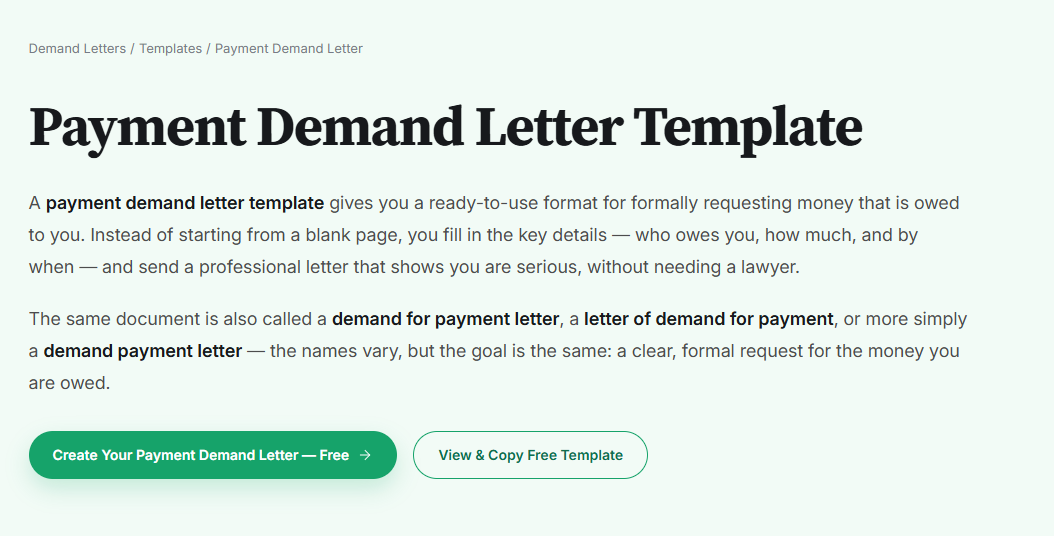
If the payment is overdue and ordinary reminders have not worked, a payment demand letter template can help organize the amount owed, the original obligation, previous contact and the action requested. It should be treated as a drafting framework, not as proof that a legal claim is valid.
Build a Project Record Before Writing Anything Formal
Creative projects often evolve through informal messages. A client may approve a quote by email, request changes through a messaging app and confirm delivery during a video call. When payment becomes disputed, those scattered exchanges suddenly matter.
Create one folder containing:
- The signed contract, accepted proposal or written estimate
- The original brief and agreed scope
- Change requests and revised pricing
- Draft approvals
- Delivery emails or file-transfer confirmations
- The final invoice
- Payment reminders and client responses
- Notes from relevant calls
This record should show what was requested, what was delivered and when payment became due. It also helps distinguish a genuine disagreement from a client who is simply avoiding the invoice.
Record the Timeline in Plain Language
A short chronology can be more useful than a folder full of unexplained screenshots. For example:
- March 3: The client accepted the photography proposal.
- March 18: The shoot was completed.
- March 22: Edited images were delivered.
- March 24: The client approved the final gallery.
- March 25: Invoice 1047 was issued with 30-day terms.
- April 24: Payment became due.
- April 29 and May 6: Reminder emails were sent.
- May 8: The client said payment would be processed the following week.
This sequence gives the freelancer a reliable foundation for the next message and makes factual errors less likely.
Send One Clear Final Reminder
A formal demand should not necessarily be the first response to a late invoice. Administrative delays happen, especially when a freelancer’s contact is different from the person who approves payments.
Send a final reminder that states the invoice number, outstanding balance and original due date. Attach the invoice again and ask the client to confirm a specific payment date.
Keep the language calm. A message such as “Please confirm when Invoice 1047 will be paid” is more useful than an accusation that the client never intended to pay. If the client disputes the work, ask for the exact contractual issue in writing.
A specific response can determine whether the problem is a missing purchase order, a temporary cash-flow delay or a disagreement that requires formal escalation.
When a Formal Demand Becomes Appropriate
A stronger written demand may be reasonable when the payment is clearly overdue, several reminders have been ignored and the freelancer can document completion of the agreed work.
At this stage, a demand letter for unpaid invoice template can provide a structure for presenting the invoice details, the history of reminders and a deadline for response. DemandLetter.ai can assist with preparing an initial draft from information supplied by the user, but every statement should be compared with the original records.
A useful letter normally identifies:
- The parties and the project
- The relevant invoice
- The amount outstanding
- The contractual payment date
- Previous attempts to obtain payment
- A clear request for payment
- A reasonable response deadline
- The supporting documents enclosed
The letter should not contain threats that the freelancer is unwilling or unable to carry out. Nor should it exaggerate losses, add unsupported fees or cite legal rules that have not been checked.
A Photography Project Example
Suppose a freelance photographer agrees to produce 40 edited images for a hotel’s seasonal campaign. The written proposal sets a fee of $3,200, with half paid in advance and the balance due within 14 days of final delivery.
The photographer completes the shoot and delivers the gallery. The hotel’s marketing manager approves the images and begins using them online, but the remaining $1,600 is not paid. Two reminders receive no response.
The photographer’s formal letter should focus on the documented facts: the proposal, advance payment, delivery date, written approval, invoice and unpaid balance. Screenshots showing the images in use may support the timeline, but emotional claims about disrespect or bad faith are unlikely to make the request clearer.
If the hotel replies that accounting never received the invoice, the issue may still be resolved administratively. If it disputes the quality of work after previously approving and publishing the images, the photographer may need professional advice about the contract and available remedies.
Protect the Relationship Without Weakening the Request
Professional language does not mean being vague. A freelancer can be courteous while stating exactly what is due and when a response is expected.
Avoid writing a long account of personal frustration. The client needs to understand the obligation, the evidence and the requested solution. Short paragraphs, labeled attachments and a clear deadline make the document easier to review.
It may also be appropriate to offer a practical route to resolution, such as asking the client to identify any invoice error immediately. A payment plan should only be offered if the freelancer is comfortable with it, and any revised arrangement should be recorded in writing.
Check AI-Assisted Drafts Manually
AI can arrange information into a readable document, but it can also produce assumptions that were never provided. Before sending a draft, verify:
- Names, addresses and company details
- Invoice numbers and amounts
- Delivery and payment dates
- Contract quotations
- Descriptions of completed work
- Any interest, fees or deadlines mentioned
- Statements about possible next steps
Remove invented facts and unnecessarily aggressive language. The final letter should reflect the freelancer’s actual records and intentions.
Sensitive documents also deserve care. Redact unrelated financial information before uploading or sharing records, and retain copies of the final letter and its attachments.
Know When to Seek Professional Advice
A self-prepared letter may be suitable for a straightforward unpaid invoice, but some disputes are more complicated. Legal advice may be appropriate when the client alleges breach of contract, the amount is substantial, intellectual property ownership is disputed or court proceedings are being considered.
Rules concerning interest, collection practices, limitation periods and legal costs vary by jurisdiction. An automated drafting tool cannot determine how those rules apply to an individual case.
Frequently Asked Questions
Can a demand letter guarantee that a client will pay?
No. The client may pay, negotiate, dispute the invoice or ignore the letter. The document creates a clearer record and request, but it cannot guarantee an outcome.
Should a freelancer stop working for a late-paying client?
That depends on the contract, the amount owed and the status of current work. Before withholding deliverables or ending an engagement, review the agreement and consider professional advice if the consequences could be significant.
Is an AI-generated demand letter legal advice?
No. AI can help structure a draft, but it does not replace a lawyer’s assessment of the contract, jurisdiction or available remedies.
A Clear Record Is the Strongest Starting Point
Late payment is easier to address when the project has been documented from the beginning. Written scope, approval records, delivery confirmation and accurate invoices give a freelancer something more useful than an angry email: a verifiable account of the work and the unpaid obligation.
DemandLetter.ai can help turn that account into an organized first draft. The freelancer must still verify every fact, choose an appropriate tone and decide whether the dispute has reached the point where professional assistance is needed.