GPS Fleet Tracking ROI: What Trucking Businesses Save
When most trucking business owners start looking at GPS fleet tracking, the first question they ask is: “What does it cost per month?”
Reasonable question. Wrong starting point.
The better question is what you are losing every single month without it. Fuel burned by drivers who idle too long. Vehicles running up repair bills because no one caught the maintenance window. Insurance premiums that stay high because your insurer has no data to reward you with. Cargo that disappears and never comes back.
Once you reverse the question, the ROI conversation changes completely. GPS fleet tracking does not feel like an added expense anymore. For most trucking operations I have seen firsthand, the monthly savings start outpacing the cost within 60 to 90 days of going live.
In this article, I walk you through exactly where those savings come from, what the real numbers look like, and what to prioritize when you are choosing a system.
What Does GPS Fleet Tracking ROI Actually Mean?
ROI from fleet tracking means the measurable financial return you get back from your investment in the technology compared to what you spend on it.
For a trucking business, the investment is straightforward: hardware cost, a monthly subscription per vehicle, and the time spent onboarding your team. The return side is where things get interesting because savings show up across five or six different cost categories simultaneously.
Most fleet managers who track their numbers report a positive ROI within the first quarter. For businesses running five or more vehicles, the savings can reach tens of thousands of dollars annually once all the categories add up.
Where Does GPS Tracking Save the Most Money?
The savings are not theoretical. They come from specific, measurable behaviors that GPS tracking either eliminates or improves. These are the exact cost categories where the money flows back.
1. Can GPS Tracking Reduce Fuel Costs?
Yes, and fuel is almost always the biggest single savings category. Fuel is typically the second-largest expense for any trucking operation after labor, so even a modest percentage reduction translates directly to serious dollar savings.
The two biggest fuel drains GPS tracking fixes are idle time and route inefficiency:
- Idle time costs the average commercial truck approximately $0.80 to $1.00 in fuel per hour of unnecessary idling, and most unmonitored drivers idle far more than operators realize.
- Inefficient routing adds unnecessary miles when drivers take longer or less optimized paths between stops.
Fleet operators who actively use GPS data to reduce idle time and optimize routes consistently report fuel cost reductions between 10 and 25 percent. For a five-truck fleet spending $8,000 per month on diesel, a 15 percent reduction saves $1,200 monthly from fuel alone.
2. How Does GPS Tracking Lower Vehicle Maintenance Costs?
Most small and mid-sized trucking businesses run reactive maintenance schedules. A driver reports something feels off. A light comes on. The repair bill then turns out to be three times larger than it would have been if anyone had caught the issue six weeks earlier.
GPS fleet tracking systems with telematics capability monitor engine diagnostics, mileage accumulation, and hours of operation in real time. When a vehicle hits a pre-set service interval, the system flags it before a small issue becomes a costly breakdown.
Businesses that shift from reactive to proactive maintenance using GPS telematics data report repair cost reductions in the range of 10 to 15 percent annually. For a fleet where vehicle maintenance runs $40,000 per year, that is $4,000 to $6,000 back in operating budget every year.
3. Does GPS Tracking Reduce Unauthorized Vehicle Use?
Unauthorized after-hours vehicle use is one of those costs that business owners often suspect but struggle to prove. Fuel consumption spikes that nobody can explain. Vehicles accumulating more mileage than the job logs account for. Wear patterns that do not match assigned routes.
With GPS fleet tracking live on every vehicle, after-hours movement triggers an instant alert. The system logs every trip start, every route taken, and every location stop with timestamps. Disputing a mileage claim or investigating an unexplained fuel charge becomes a two-minute task instead of an unresolvable argument.
Most fleet operators who address unauthorized use after deploying GPS tracking find the monthly fuel savings in that category alone justify a significant portion of the platform cost.
4. Can GPS Tracking Lower Your Insurance Premiums?
Commercial fleet insurance premiums are priced on risk, and GPS tracking is one of the most concrete risk reduction tools available to trucking businesses today.
Insurance carriers see driver behavior data as direct evidence of lower risk. Speeding events, harsh braking, aggressive cornering, and excessive idle time all contribute to accident likelihood, and GPS telematics systems capture every one of them. Carriers who review that data reward businesses that use it.
Several major commercial fleet insurers now offer premium discounts ranging from 5 to 15 percent for fleets that use active GPS tracking and share driver behavior reports.
On a commercial fleet policy running $30,000 per year, a 10 percent discount saves $3,000 annually without changing a single vehicle or route.
5. How Does GPS Tracking Prevent Cargo Theft?
Cargo theft costs U.S. trucking and logistics businesses over $700 million every year according to industry estimates, and recovery rates for stolen cargo without tracking technology are painfully low.
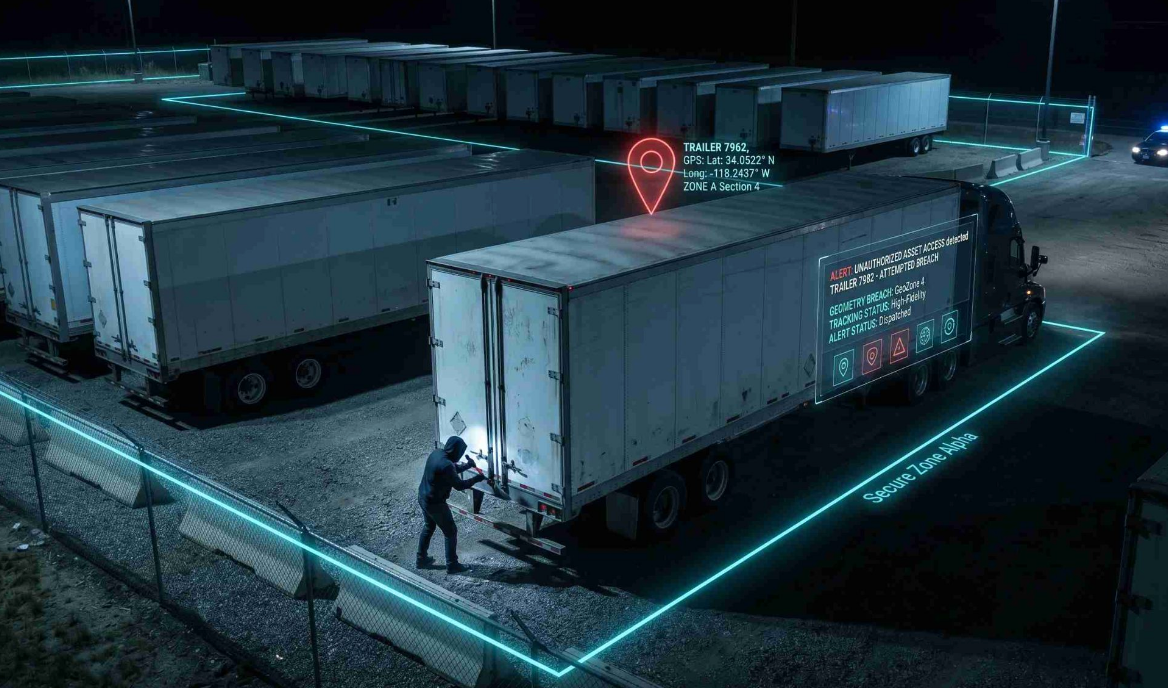
GPS fleet tracking adds a recovery layer that dramatically changes the outcome when theft happens. Geofencing alerts notify you the moment a vehicle or trailer moves outside a defined boundary or moves during non-operating hours. Real-time location data goes directly to law enforcement, giving them coordinates instead of a vague last-known location.
Providers like BrickHouse GPS offer commercial-grade fleet tracking solutions designed specifically for this use case, covering everything from cab-mounted vehicle trackers to battery-powered asset trackers for trailers and loose equipment that sits away from the main fleet. Having a system in place means that when theft happens, the recovery window is measured in hours rather than days.
How Long Does It Take to See ROI From GPS Tracking?
Most trucking businesses begin seeing measurable returns within 30 to 90 days of deployment, depending on fleet size and how actively managers use the data.
The fastest savings typically come from fuel and unauthorized use because those are behavioral changes that take effect immediately once drivers know the vehicles are tracked. Maintenance savings build more slowly as the proactive scheduling system replaces the reactive one over several months. Insurance discounts usually kick in at the next renewal cycle once you have enough behavioral data to share with your carrier.
A five-vehicle fleet investing roughly $500 per month in a GPS tracking platform can realistically expect combined savings of $1,500 to $2,500 monthly across all categories within the first quarter. After the first year, many operators report the tracking system is effectively paying for itself three to five times over.
Real Numbers: What Fleet Owners Report Saving
Numbers always land harder than theory, so below is a realistic breakdown for a trucking operation running eight vehicles:
| Cost Category | Monthly Spend (Pre-GPS) | Estimated Savings | Monthly Saving |
| Fuel | $12,000 | 15% | $1,800 |
| Maintenance/Repairs | $4,000 | 12% | $480 |
| Unauthorized Use (fuel/mileage) | Built into fuel | Variable | $300–$600 |
| Insurance Premium | $3,500 | 10% | $350 |
| Cargo theft losses (amortized) | $800 | 80% reduction | $640 |
| Total Monthly Saving | $3,570–$3,870 |
GPS tracking platform cost for eight vehicles: roughly $600 to $900 per month depending on the provider and hardware tier.
Net monthly return after platform cost: approximately $2,700 to $3,200.
Over 12 months, that is between $32,400 and $38,400 in net savings for a single mid-sized fleet.
What to Look for in a GPS Fleet Tracking System
Not every GPS platform delivers the same level of ROI, and a lot of businesses choose the wrong system because they focus on price per vehicle rather than depth of data.
The features that actually drive ROI are:
- Real-time location updates every 10 to 30 seconds (not delayed check-ins)
- Driver behavior reporting that covers speeding, idle time, harsh braking, and after-hours movement
- Geofencing with instant alert capability for unauthorized movement
- Maintenance scheduling tied to mileage or engine hours
- Asset tracking capability for trailers and equipment, not just powered vehicles
Hardware flexibility also matters. A reliable system should handle hardwired units for high-security vehicles, OBD-II plug-in devices for quick deployment, and battery-powered trackers for trailers and assets without a permanent power source.
BrickHouse GPS covers all three hardware categories within one platform, which simplifies management for mixed fleets. Their system also ships within 48 hours and operates without long-term contracts, something worth noting if you are testing the technology before committing to a full rollout.
Conclusion: The Savings Are Already Happening, Just Not to You Yet
Every mile your fleet runs without GPS tracking is a mile where fuel efficiency, driver behavior, maintenance windows, and theft risk go completely unmonitored.
The businesses that implement fleet tracking early are not just saving money. They are building operational data that makes every business decision better, from fleet expansion planning to driver performance reviews to insurance negotiations.
The ROI from GPS fleet tracking is not a projection. For trucking businesses willing to actually use the data, the numbers show up in the first quarter and grow from there.
FAQ
How much does GPS fleet tracking cost per vehicle per month?
Most commercial GPS fleet tracking plans range from $20 to $50 per vehicle per month, depending on features, hardware included, and contract terms. Entry-level plans cover basic real-time location.
Full telematics platforms with driver behavior reporting, maintenance alerts, and dash cam integration sit at the higher end of that range.
Is GPS tracking worth it for a small fleet of 3 to 5 trucks?
Even for a three-truck operation, fuel savings and unauthorized use reduction usually cover the platform cost within the first month or two. The ROI math works at any fleet size because the savings come from percentage reductions in existing costs rather than a flat savings model..
Does GPS fleet tracking improve driver safety?
Tracking driver behavior creates a measurable improvement in driving habits because drivers adjust behavior when they know performance is recorded. Fleets that use driver behavior data actively in coaching conversations see reductions in speeding and harsh braking events over time, which lowers accident rates and extends vehicle life.
Can GPS tracking really lower commercial insurance premiums?
Several commercial fleet insurers offer premium reductions for businesses that use GPS tracking and provide behavioral data at renewal. The discount varies by carrier and fleet risk profile, but 5 to 15 percent is a realistic range for fleets with documented improvement in driver behavior metrics.
What happens if a tracked vehicle enters a dead zone with no cellular signal?
Most modern commercial trackers store location data locally when cellular coverage drops and then upload the complete trip history once the signal is restored. Some systems also support satellite fallback for operations in genuinely remote areas.