How To Keep Your Tucson Home Comfortable When Extreme Heat Strains Your AC
Key Takeaways
- Extreme heat can place heavy demand on home cooling systems.
- Simple checks may reveal airflow, thermostat, filter, and drainage concerns early.
- Shade, fans, window coverings, and practical thermostat settings can improve comfort.
- Electrical, refrigerant, and recurring performance problems require qualified service.
- Every household should have an extreme-heat backup plan.
Table Of Contents
- Why Tucson Homes Face Heavy Cooling Demand
- Early Signs That an AC System Is Struggling
- A Safe Home Cooling Checkup
- How Airflow Problems Affect Comfort
- Ways To Reduce Indoor Heat Gain
- How To Manage Cooling Costs
- When To Stop Troubleshooting
- What To Do During an AC Outage
- Seasonal Maintenance Checklist
- Conclusion
Tucson summers can make even a well-maintained air conditioner work for hours at a time. Knowing which changes are normal during intense heat and which may signal trouble helps homeowners protect comfort, avoid preventable damage, and decide when to arrange AC repair in Tucson, AZ. A home that feels warmer than expected is not always dealing with a failed AC unit. Sun exposure, clogged filters, blocked vents, duct leaks, thermostat settings, and indoor heat-producing appliances can all affect indoor temperature. A few safe checks can narrow down the cause before a small issue becomes a major interruption.
Why Tucson Homes Face Heavy Cooling Demand
Long stretches of high outdoor temperatures can keep cooling equipment running far longer than it would during a mild season. Roof surfaces absorb heat, west-facing windows let in strong afternoon sun, and small gaps around doors or windows allow hot air to enter. Limited insulation and leaky ductwork can add to the burden. Overnight heat matters, too. When temperatures stay elevated after sunset, the home has less time to release stored heat. For example, a thermostat may be set correctly at 78 degrees, but a sunny upstairs bedroom can still feel warm if the room has weak airflow, insufficient insulation, or unshaded windows.
Early Signs That an AC System Is Struggling
Pay attention to changes in cooling performance rather than assuming discomfort is simply part of summer. Warm or uneven air from vents, weak airflow in certain rooms, repeated short cycling, persistent musty or burning odors, new rattling or grinding sounds, water near indoor equipment, and a sudden increase in energy use all deserve attention. A system may run for long periods during extreme heat, but it should still provide reasonably steady cooling. If the temperature keeps climbing indoors, or the unit cycles on and off every few minutes, a mechanical or airflow issue may be present.
A Safe Home Cooling Checkup
Homeowners can perform a basic inspection without opening electrical panels, removing equipment covers, or handling refrigerant. Start with these steps:
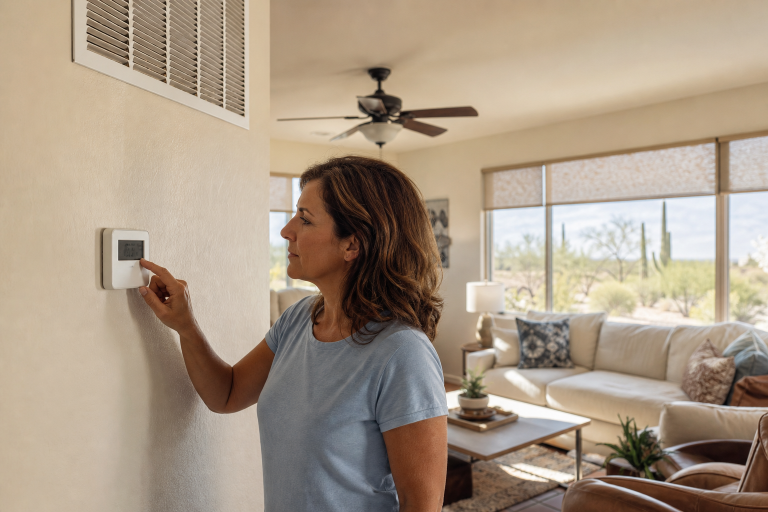
- Confirm the thermostat is set to cooling mode and the temperature setting is below the current indoor temperature.
- Check whether the fan is set to "Auto" or "On," and note whether airflow changes.
- Inspect the air filter. Replace it if it appears dirty or heavily dusted.
- Make sure supply vents and return grilles are open and free of furniture, rugs, or boxes.
- Clear leaves, weeds, and stored items away from the outdoor condenser.
- Look for visible water, ice, or damaged insulation around accessible equipment.
- Listen for unusual sounds during startup, operation, and shutdown.
Turn the system off and seek professional help if you notice a burning smell, exposed wiring, repeated breaker trips, heavy ice accumulation, or water that could damage floors, walls, or ceilings.
How Airflow Problems Affect Comfort
Airflow is central to effective cooling. A clogged filter can restrict airflow through the system, while closed vents or blocked returns can leave rooms hot and force the equipment to work harder. One persistently warm room may indicate a duct issue, poor insulation, or direct solar gain rather than a thermostat failure. Keep return grilles clear and avoid closing large numbers of supply vents to redirect cooling. When practical, leaving interior doors open can also help air circulate more evenly between rooms.
Ways To Reduce Indoor Heat Gain
Reducing heat before it enters the home makes the air conditioner's job easier. Close blinds and curtains on sunny windows, especially in the afternoon. Reflective shades and solar screens can help in areas with intense direct sunlight. Sealing visible gaps around windows and exterior doors also limits hot air infiltration. Ceiling fans and portable fans do not lower the room temperature, but they can help people feel cooler through air movement. Use them only in occupied rooms, avoid using the oven during the hottest hours when possible, and keep the outdoor unit clear so it can release heat properly.
How To Manage Cooling Costs
Choose the highest thermostat setting that remains safe and comfortable for everyone in the household. Large temperature setbacks may lead to long recovery periods during severe heat, particularly if the home is exposed to strong sun or has insulation and airflow limitations.
Compare current electricity use with prior summer bills to spot changes that could point to equipment trouble or altered household habits. A programmable or smart thermostat can support a consistent schedule, but do not sacrifice health or safety during dangerous heat. Lower-cost measures, such as fans and closed shades, work best when paired with proper maintenance and reasonable settings.
When To Stop Troubleshooting
A service call is the safer choice when the system will not start after thermostat checks, the breaker trips again after one reset, the outdoor unit runs without cooling the home, or ice returns after the unit has been allowed to thaw. Professional attention is also appropriate for refrigerant-like odors, burning smells, visible electrical damage, water damage, frequent repairs, and unstable indoor temperatures.
What To Do During an AC Outage
During a cooling outage, close blinds, keep exterior doors shut, drink water regularly, and avoid strenuous activity during the hottest part of the day. Battery-powered fans can provide limited relief. Check on older adults, young children, pets, and people with health conditions, since they may be more vulnerable to heat-related illness. If the home becomes unsafe, move to a cooler location. The City of Tucson operates seasonal Tucson cooling centers for temporary relief during extreme heat. For the 2026 season, the city announced daily operations from June 1 through September 30.
Seasonal Maintenance Checklist
- Inspect or replace the air filter before and during heavy-use periods.
- Clear debris from around the outdoor unit.
- Test thermostat operation before the first major heat wave.
- Keep vents and return grilles open and unobstructed.
- Check accessible ductwork for loose connections or visible damage.
- Schedule an inspection if the system has a history of breakdowns.
- Keep notes on repairs, unusual sounds, comfort changes, and energy use.
Common Questions
Why Does The AC Run Constantly In Tucson?
Long run times are common during extreme heat. However, restricted airflow, duct leakage, poor insulation, an undersized system, or a mechanical issue can also cause near-constant operation.
Should A Homeowner Turn Off An AC That Is Making Strange Noises?
Turn it off if the noise is loud, sudden, or paired with weak cooling, burning odors, or repeated cycling. Continued operation can worsen damage.
How Often Should An AC Filter Be Checked?
Check it monthly during periods of heavy use. Homes with pets, dust, or frequent system operation may need more frequent replacement.
Is Ice On An AC Unit A Good Sign?
No. Ice commonly indicates restricted airflow or a refrigerant-related problem. Do not scrape it off. Turn the system off and arrange an inspection.
How Can A Homeowner Decide Between Repair And Replacement?
Consider the system's age, repair history, operating cost, reliability, and condition of major components. An inspection can help compare the cost of an immediate repair with the long-term replacement value.
Conclusion
Small actions can make a meaningful difference during Tucson's hottest months. Clean filters, open airflow paths, shade windows, set practical thermostat settings, and have an outage plan all support a more comfortable home. When the problem involves electricity, refrigerant, water damage, ice, or repeated breakdowns, qualified service is the safest next step. Routine maintenance and early attention to unusual noises, weak airflow, or inconsistent cooling can also help prevent costly repairs and extend the life of your HVAC system. By preparing before peak summer temperatures arrive, homeowners can improve energy efficiency, maintain indoor comfort, and reduce the risk of unexpected system failures during extreme heat.