Non-Toxic Children’s Furniture: What Australian Parents Need to Know
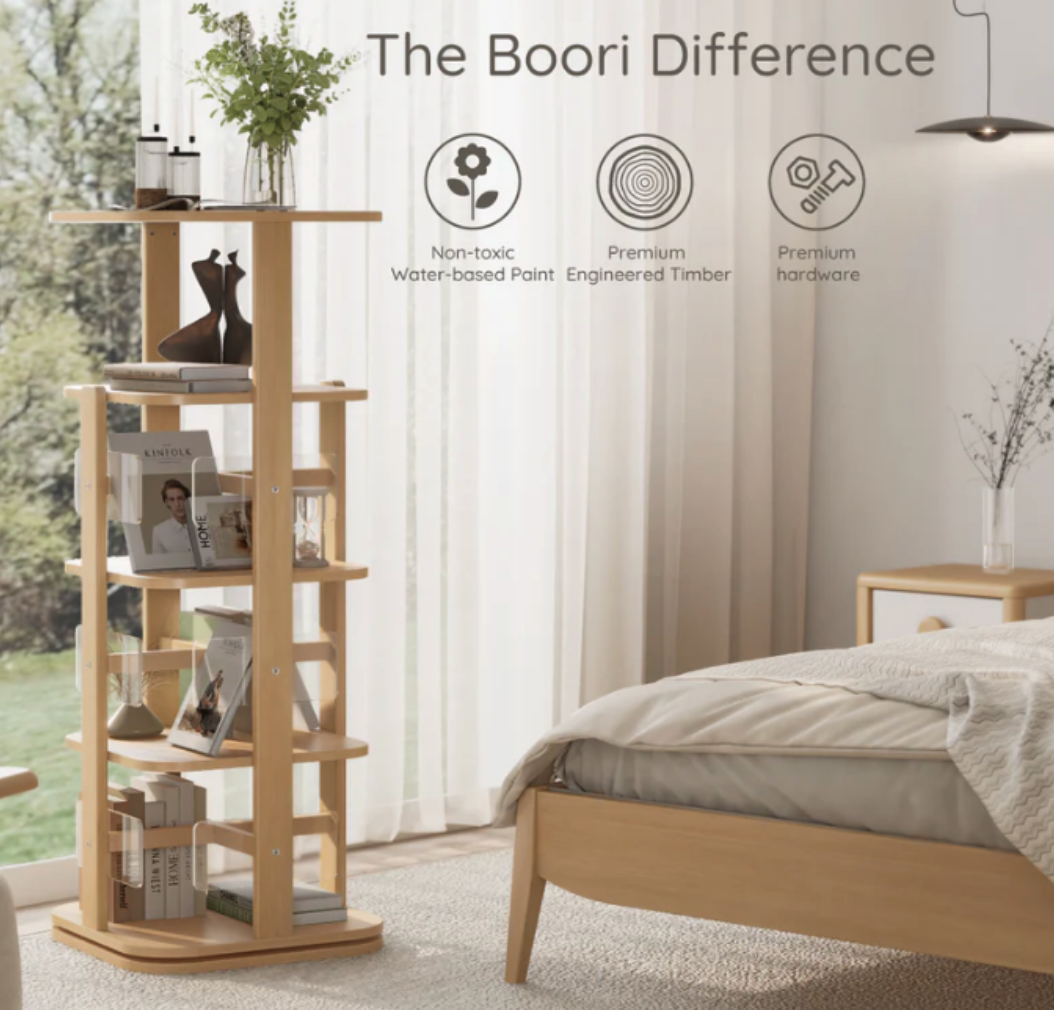
Children spend more time in contact with their bedroom furniture than with almost any other surface in the home. They touch, lean against, and occasionally mouth furniture surfaces during play and rest. For infants and toddlers who spend significant time on the floor beside low shelves and storage units, the finish and material of nearby furniture is particularly relevant. Understanding what non-toxic children’s furniture means in the Australian context, which standards apply, and what to look for when purchasing gives parents a clear and practical framework for making safe choices.
Key Takeaways
- Non-toxic children’s furniture in the Australian market means furniture finished with paints, lacquers, and coatings that meet Australian standards for lead content and volatile organic compound levels.
- Australian Standards AS/NZS 8124 and the Australian Consumer Law provide the primary framework for children’s product safety in Australia, including requirements that apply to children’s furniture.
- Lead-free paint is the most commonly cited non-toxic requirement, but VOC levels in finishes are equally important for a child who spends hours in a room with freshly finished furniture.
- Non-toxic certification should be explicitly stated in product specifications, not assumed. ‘Natural’ or ‘eco-friendly’ claims without certification are not equivalent to certified non-toxic standards.
- Solid timber with water-based finishes is generally the safest combination for children’s furniture when the timber is responsibly sourced and the finish is certified.
Australian Safety Standards for Children’s Furniture Finishes
| Standard or Requirement | What It Covers | Why It Matters |
| AS/NZS 8124 (Toy safety, surface coating provisions) | Lead content limits in surface coatings | Applies to furniture with child-accessible painted surfaces |
| Australian Consumer Law | General product safety requirements | Provides enforcement mechanism for unsafe products |
| REACH regulation equivalent | Chemical restrictions in materials | Limits restricted substances in finishes and materials |
| GREENGUARD certification | VOC emission levels | International standard, voluntarily adopted by some brands |
| OEKO-TEX certification | Textile and material chemical safety | Relevant for fabric components on furniture |
What Non-Toxic Actually Means
Lead-Free Paint and Coatings
The most widely understood non-toxic requirement for children’s furniture is the absence of lead in painted or coated surfaces. Lead was used in household paints in Australia until 1997 and has been prohibited in residential paints above minimal trace levels since then. For new children’s furniture purchased from reputable retailers, lead in surface coatings should not be present. The concern is primarily with older furniture, imported furniture from markets with different standards, or budget pieces from suppliers who do not test their finishes.
VOC Levels in Finishes
Volatile organic compounds are chemicals that evaporate at room temperature from paints, lacquers, adhesives, and composite materials. In a freshly finished room or a room with newly purchased furniture, VOC off-gassing from furniture finishes can affect air quality. For a child who sleeps in that room, the cumulative exposure to VOCs from furniture surfaces over months and years is a relevant health consideration. Water-based lacquers and paints have significantly lower VOC levels than solvent-based alternatives and are the preferred finish for children’s furniture from a health perspective.
Materials Used in Board and Panel Products
MDF and particleboard products use formaldehyde-based adhesives in their manufacture. Formaldehyde is a VOC that off-gasses from board products over time. Higher-quality MDF products use low-formaldehyde or formaldehyde-free adhesives and are covered with sealed surfaces that further limit off-gassing. When purchasing children’s furniture made from MDF or particleboard, look for explicit statements about low or zero formaldehyde content in the core material.
How to Verify Non-Toxic Claims When Purchasing
Non-toxic claims in product listings are not uniformly reliable. Terms such as ‘natural’, ‘eco-friendly’, or ‘child-safe’ without specific certification references are marketing descriptions rather than technical specifications. The most reliable approach to verifying non-toxic claims:
- Look for explicit certification references: GREENGUARD, OEKO-TEX, or equivalent Australian standards citations in the product specification, not just in the marketing description.
- Check that the product is described as meeting Australian safety standards specifically, not just ‘international safety standards’, which could reference any market’s framework.
- Ask the retailer directly for the finish specification document or safety data sheet if the product listing does not provide sufficient detail.
- For solid timber furniture, check that the finish is described as water-based rather than solvent-based.
For children’s bookshelves and bookcases with certified non-toxic finishes, visit
https://boori.com.au/collections/bookshelves-bookcases.
Frequently Asked Questions
Is solid timber safer than MDF for children’s furniture?
Solid timber with a certified water-based finish is generally safer than MDF with a solvent-based finish. However, high-quality MDF with low-formaldehyde core adhesive and a certified water-based surface finish can be equivalent to solid timber from a health perspective. The finish quality and the core material specification together determine safety, not the material type alone.
How long does off-gassing from new furniture last?
Most VOC off-gassing from new furniture is heaviest in the first four to eight weeks after manufacture. Allowing new furniture to air in a well-ventilated space before placing it in a child’s bedroom, or ventilating the bedroom well for the first few weeks after the furniture is installed, reduces the child’s exposure during the peak off-gassing period.
Is second-hand children’s furniture safer from a chemical perspective?
Older second-hand furniture has completed most of its off-gassing, which is an advantage. However, pre-1997 furniture may contain lead paint, and furniture from any era may have been refinished with finishes of unknown composition. For pre-school furniture or furniture used by infants and toddlers who are likely to mouth surfaces, second-hand pieces should be inspected carefully and ideally have any painted surfaces tested before use.
Does non-toxic furniture cost more?
Not necessarily at a significant premium. The most established children’s furniture brands include certified non-toxic finishes as a standard specification across their ranges rather than as a premium feature. The additional cost of water-based versus solvent-based finishes at manufacturing level is modest, and brands that absorb this as a standard cost do not typically pass a significant premium on to the consumer.
Final Thoughts
Non-toxic children’s furniture is a baseline requirement rather than a premium feature when purchasing furniture for a child’s bedroom. Understanding what the claim means, which certifications support it, and how to verify it before purchasing gives parents confidence in the furniture they choose without requiring specialist knowledge. For Australian families, looking specifically for Australian safety standard compliance, water-based finishes, and explicit certification references in product specifications is the most reliable approach to safe furniture selection.