
Choosing a U.S. Supplier for High-Performance Custom Pipe Taps
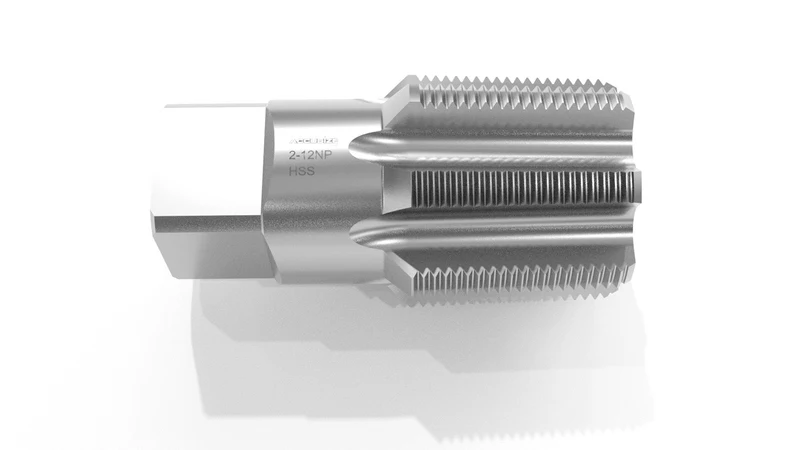
Good tooling partners are very important when it comes to high-performance manufacturing. Special pipe taps need accuracy, uniformity, and technical expertise. The choice of suppliers has a direct effect on the quality, lead times, and stability of production. The U.S. suppliers are strategic in their application in demanding applications. Awareness of assessment requirements assists the teams in being confident in their sourcing choices.
Importance of Domestic Manufacturing
Domestic suppliers work in accordance with the standards of quality and compliance. Rules promote homogeneity of materials and procedures. The closeness allows for more effective supervision and interaction. Local manufacturing lessens geopolitical and shipping threats. Local accountability and responsiveness enhance reliability.
Customization Capabilities Matter
Nonstandard tap designs are usually necessary in high-performance applications. Special geometries meet special material or tolerance demands. The suppliers should assist in the engineering cooperation of the design phases. Flexibility allows optimization to be done to match a particular production. Customization separates the capable suppliers and generic vendors.
Engineering and Technical Support
Good engineering assistance is enhanced in terms of tooling. Engineers assist in the proper choice of materials and coatings. Technical teams preventively troubleshoot the problematic aspects of applications. Teamwork reduces the development times. Sharing of knowledge improves relationships with suppliers over the long run.
Material Expertise and Selection
Taps of high performance require a careful choice of material. The suppliers should provide advanced steels and specialty alloys. Material skills guarantee strength, toughness, and wear resistance. Wrong materials lead to untimely failures of the tools. Constant quality is sustained by deep metallurgical knowledge.
Advanced Coating Options
Coatings increase the durability and performance to a great extent. The suppliers should provide modern coating technologies. Correct coating decreases the friction and heat production. Coating knowledge promotes rapid and high. Sophisticated features increase the life of tools significantly.
Quality Control Systems
Quality control processes are strict in the case of reliable suppliers. Inspections are used to measure dimensional accuracy and surface consistency. Traceability and accountability are supported in documentation. Quality systems minimise variations in production batches. Uniform quality safeguards the downstream manufacturing.
Lead Time and Responsiveness
Agile manufacturing is backed by short lead times. Local suppliers are more responsive to urgent demands. Problems are solved efficiently by way of quick communication. Being responsive reduces the delays and schedule delays. Velocity is essential in the competitive production environment.
Supply Chain Reliability
Constant supply chains guarantee continuity of production. In-house sourcing decreases reliance on foreign logistics. Reduced transit delays enhance the accuracy of planning. Trustworthy suppliers also keep inventory reserves at strategic positions. Continuity of supply is in favour of operational resilience.
Compliance and Standards Adherence
Industry standards regulate the performance and accuracy of the thread. The suppliers should follow ANSI and its specifications. The certification reflects the values of quality and regularity. Compliance minimizes the risk of rejection of parts. The compliance of the standards guarantees the interchangeability and reliability.
Cost Versus Total Value
The minimum unit price hardly shows the actual value. Failure in performance augments the time and scrap expenses. Long-life tools save on the cost of threaded holes. The importance of total lifecycle value is higher than the price. Intelligent sourcing is concerned with long-term savings.
Experience in Target Industries.
Experience in the industry enhances application knowledge to a great extent. Oil, gas, or manufacturing needs suppliers are more economical. Design and material choices are informed by experience. Track records are proven to minimize risk. Congruency in the industry facilitates the same results.
Communication and Transparency.
Effective communication is a source of trust and efficacy. The suppliers must give achievable schedules and updates. Transparency eliminates surprises among production cycles. Open communication helps in sustaining improvement efforts. The quality of communication is a reflection of the professionalism of suppliers.
Scalability for Future Expansion.
The manufacturing requirements vary with business expansion. The suppliers are forced to scale production in a reliable manner. Flexibility facilitates volume or design modifications. Scalable partners minimize sourcing disruption in the future. Long-term relationships rely on growth correspondence.
Protection of Intellectual Property.
Tooling design needs confidentiality protection. There are strict intellectual property laws that the U.S. suppliers practice. Protection is a way of guaranteeing that proprietary designs are safe. When the law is in place, trust is enhanced. IP security helps to be innovative and collaborate.
Evaluating Pipe Tap Expertise
Suppliers should demonstrate deep threading knowledge. Experience with pipe taps indicates technical competence. Specialized expertise ensures proper thread form and tolerance. Proven capability reduces trial-and-error costs. Expertise directly affects performance reliability.
Conclusion
Choosing a U.S. supplier requires careful evaluation beyond pricing. Customization, engineering, and quality systems define performance outcomes. Domestic advantages improve reliability, communication, and compliance. Strategic sourcing protects production stability and efficiency. Informed decisions create resilient manufacturing partnerships. The right supplier supports long-term competitive success.


