Why Is Rivet Shelving Called “Rivet” Shelving If It Doesn’t Use Traditional Rivets?
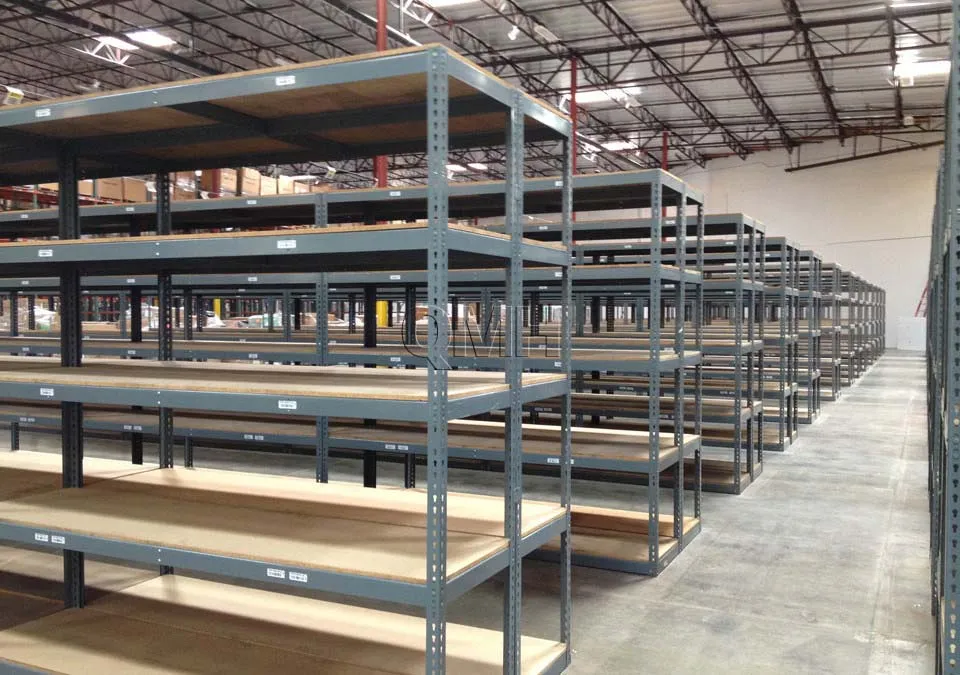
If you’ve shopped for industrial shelving, you’ve probably encountered “rivet shelving” as a popular option for warehouses, stockrooms, and storage facilities. The name suggests a construction method involving rivets—those permanent metal fasteners that require special tools to install and remove. Yet when you examine rivet shelving up close, you won’t find traditional rivets anywhere. Instead, you’ll see a clever system of slots, tabs, and keyhole connections that assemble without tools. So why does the industry call it rivet shelving when no actual rivets are involved? Understanding the terminology, the actual construction method, and how this shelving type differs from alternatives helps you make informed decisions when selecting storage systems.
For those researching storage solutions, understanding what rivet shelving actually is—beyond the confusing name—helps you evaluate whether this construction method suits your specific requirements, load capacities, and budget compared to boltless, welded, or other shelving alternatives.
The Origin of the “Rivet” Name
Historical Context
The term “rivet shelving” is actually a misnomer that stuck through decades of use in the storage industry. Early industrial shelving systems in the mid-20th century did use actual rivets to connect upright posts to shelf beams. These rivets created permanent, sturdy connections that could support substantial loads. However, they had significant drawbacks: installation required special rivet guns and skilled labor, reconfiguration was nearly impossible without drilling out rivets, and customization was difficult since rivet holes had to be precisely placed during manufacturing.
As shelving evolved, manufacturers developed slot-and-tab systems that mimicked the strength of riveted connections while eliminating the installation difficulties. These new systems retained the “rivet shelving” name even though the construction method had fundamentally changed. The name stuck because it distinguished this style from boltless shelving and helped customers understand they were getting industrial-strength storage rather than lightweight residential units.
What the Name Really Means Today
In modern usage, “rivet shelving” doesn’t describe the fastening method—it describes a shelving style characterized by slotted uprights into which shelf beams insert and lock, industrial-duty construction capable of supporting 500-3,000+ pounds per shelf, and steel construction typically 16-gauge or heavier. The “rivet” terminology indicates strength and permanence rather than the actual use of rivets.
How Rivet Shelving Actually Works
The Slot-and-Tab System
Modern rivet shelving uses a ingenious keyhole slot system. Vertical posts have diamond-shaped or teardrop-shaped slots punched at regular intervals (typically every inch or two). Shelf beams have corresponding tabs or hooks at each end. To assemble, you insert the beam tabs into the slots at the desired height, then drop the beam down. The tab locks into the narrow portion of the slot, creating a secure connection that resists upward or outward movement.
This system provides several advantages over both traditional riveted construction and bolt-together systems: assembly requires no tools—just alignment and dropping into place, height adjustment is simple by lifting beams and repositioning, and the connection is strong enough for industrial loads while remaining reconfigurable.
Why This Connection Method Works
The strength of rivet shelving comes from how weight loads the connection. When you place items on shelves, the weight presses downward, pushing the beam tabs firmly into the locked position. The heavier the load, the more secure the connection becomes—the weight effectively locks everything in place. This self-securing property makes the system both strong and safe for heavy-duty storage.
The keyhole design prevents accidental disassembly. The tabs can’t simply slide out of the slots—you must deliberately lift the beam to align tabs with the wider portion of the slot. This prevents shelves from coming apart even if bumped or jostled during normal warehouse operations.
Rivet Shelving vs. Boltless Shelving
The Terminology Confusion
Adding to the naming confusion, many people use “rivet shelving” and “boltless shelving” interchangeably since both assemble without bolts or tools. However, there are subtle distinctions. True boltless shelving typically uses clip-together posts and beams with different connection mechanisms—often plastic clips or metal tabs that snap together. Rivet shelving specifically refers to the keyhole slot-and-tab system with heavier-gauge steel construction.
In practice, both terms often describe similar products, and manufacturers use them inconsistently. The more important consideration is the specific load capacity, construction gauge, and connection security rather than which term the manufacturer uses.
Load Capacity Differences
Generally, shelving marketed as “rivet shelving” has higher load capacities than products labeled just “boltless shelving.” Rivet shelving commonly supports 800-3,000 pounds per shelf depending on shelf dimensions and configuration. Lighter-duty boltless shelving might support only 300-600 pounds per shelf. However, these are generalizations—always check the manufacturer’s rated capacity for specific products rather than assuming based on terminology.
Advantages of Rivet Shelving Systems
Easy Assembly and Reconfiguration
The most significant advantage of rivet shelving is assembly simplicity. You can set up an entire shelving unit in 15-30 minutes without tools, experience, or special skills. Need to adjust shelf heights later when inventory changes? Simply lift the beam and reposition it at a different height. This flexibility is impossible with welded shelving and cumbersome with bolted systems requiring tools and hardware management.
For facilities where storage needs evolve—seasonal inventory fluctuations, product line changes, or workflow modifications—the reconfigurability of rivet shelving provides enormous value. You’re not locked into a fixed configuration that becomes obsolete when needs change.
Cost-Effective Industrial Storage
Rivet shelving occupies a sweet spot in the industrial storage market: strong enough for serious warehouse use but affordable compared to welded or custom fabricated alternatives. The manufacturing process—punching slots in sheet steel and forming beam ends—is efficient and cost-effective, keeping prices reasonable while maintaining industrial-grade strength.
Expandability
Most rivet shelving systems are modular and expandable. You can add units end-to-end sharing common posts, add extra shelves to existing units, or purchase extension kits to increase depth or width. This modularity means you can start with a basic configuration and expand as needs grow without replacing your entire storage system.
Limitations to Consider
Not Suitable for Extreme Loads
While rivet shelving handles impressive weights, it’s not appropriate for every application. Extremely heavy items exceeding 3,000 pounds, unstable or oddly shaped loads requiring custom support, or applications where failure could cause catastrophic damage may require welded pallet racking or custom fabricated solutions.
Potential for Improper Assembly
The tool-free assembly is an advantage but also introduces risk. Without bolts or fasteners that provide obvious feedback when properly secured, inexperienced users might not fully seat beams in slots. Improperly assembled shelving can fail under load, creating safety hazards. Quality systems include safety clips or locks that prevent this issue, but cheaper alternatives may not.
Load Distribution Matters
Rivet shelving’s weight capacity assumes evenly distributed loads. Concentrated point loads—placing all weight in the center or at one end of a shelf—can exceed the structural limits even if total weight is within capacity. Users must understand proper loading techniques to prevent overload and potential failure.
Selecting Quality Rivet Shelving
When evaluating rivet shelving options, look beyond marketing terminology and focus on specifications: shelf load capacity ratings (and whether they’re tested or just claimed), steel gauge thickness (16-gauge or heavier for industrial use), connection security features like safety clips or locks, and adjustability intervals (smaller spacing provides more configuration options).
Working with reputable suppliers like SRS-i ensures you receive accurate load capacity information, quality construction that meets safety standards, and expert guidance on selecting appropriate configurations for your specific storage needs. They understand that the terminology around shelving types can be confusing and can help you focus on the functional requirements that actually matter for your facility.
The Bottom Line on Rivet Shelving
Despite its confusing name, rivet shelving represents an excellent solution for most industrial and commercial storage applications. The term may be a historical artifact that no longer accurately describes the construction method, but the product itself delivers genuine value: industrial-strength storage with easy assembly, reconfigurability that accommodates changing needs, and cost-effectiveness that fits most budgets.
Don’t let terminology confusion prevent you from considering this versatile storage solution—focus on whether the actual capabilities match your requirements, regardless of what name manufacturers give it.