Record Most People Don’t Think The Hidden Consequences of a Criminal About
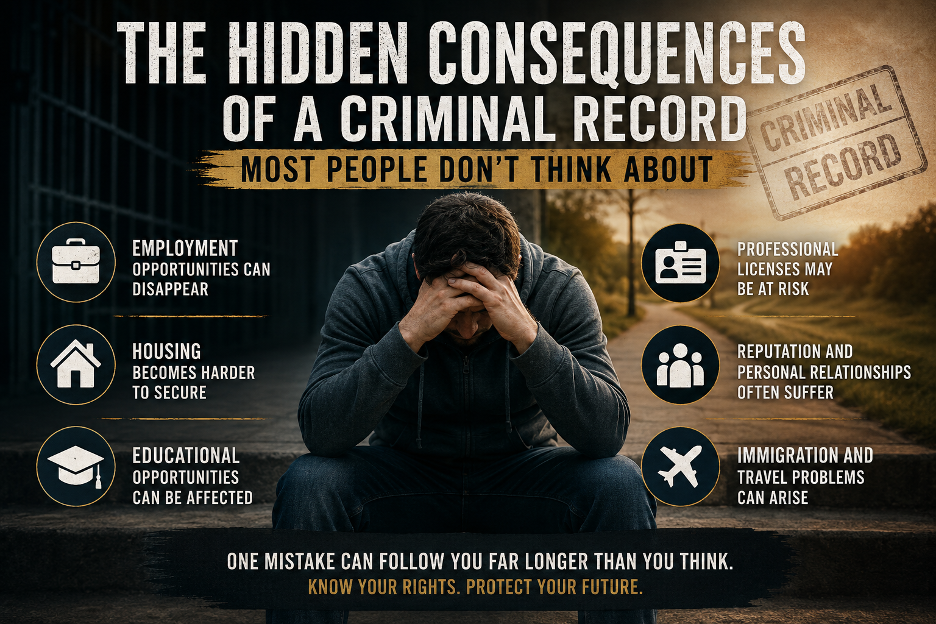
Most people understand that being arrested or convicted of a crime can result in fines, probation, or even jail time. What many fail to realize, however, is that the consequences of a criminal record often extend far beyond the courtroom. Even after a sentence is completed, a criminal history can continue affecting nearly every aspect of a person’s life for years—sometimes permanently.
As a criminal defense attorney, I have seen firsthand how one mistake, one accusation, or one conviction can create ripple effects people never anticipated. The reality is that the legal penalties imposed by a judge are often only part of the problem. The “hidden consequences” of a criminal record can sometimes be even more damaging.
Employment Opportunities Can Disappear
One of the most immediate and frustrating consequences of a criminal record is difficulty finding employment. Many employers conduct background checks as part of the hiring process. Even if an applicant is qualified, experienced, and honest about their past, a criminal charge or conviction can quickly move their resume to the rejection pile.
Certain careers may become entirely unavailable depending on the offense. Jobs involving education, healthcare, childcare, government work, finance, or professional licensing often have strict rules regarding criminal backgrounds. Even industries without formal restrictions may hesitate to hire someone with a record because of perceived liability concerns.
In many situations, people are judged not by who they are today, but by something that happened years ago.
Housing Becomes Harder to Secure
Finding a place to live can also become significantly more difficult. Many landlords conduct criminal background screenings before approving rental applications. A criminal history—especially involving violence, theft, or drug-related allegations—may result in automatic denials.
This challenge can create a difficult cycle. Stable housing often plays an important role in helping people rebuild their lives, maintain employment, and support their families. Yet those same people may struggle to secure housing because of past mistakes.
Even public housing programs can impose restrictions for individuals with certain criminal records.
Professional Licenses May Be at Risk
For people working in licensed professions, a criminal charge can jeopardize an entire career. Nurses, teachers, real estate professionals, attorneys, contractors, healthcare providers, and many others may face disciplinary proceedings or licensing problems following an arrest or conviction.
In some situations, even charges that never result in a conviction can trigger investigations by professional boards.
This means a criminal case may threaten not only someone’s freedom, but also the career they spent years building.
Educational Opportunities Can Be Affected
Students and young adults often do not realize that a criminal record can impact educational opportunities. Colleges, universities, scholarship programs, and graduate schools sometimes ask applicants about prior criminal histories.
A conviction may also affect eligibility for certain internships, professional programs, or campus housing. For younger individuals, one poor decision can have consequences that follow them into adulthood.
Reputation and Personal Relationships Often Suffer
A criminal accusation can carry a powerful social stigma—even when someone has not been convicted.
Friends, coworkers, neighbors, and even family members may view a person differently after an arrest. Social media, online court records, and public mugshot websites can make private matters feel very public.
In some cases, the damage to a person’s reputation begins before they ever have their day in court.
This is especially troubling because being charged with a crime does not mean someone is guilty. Yet public perception often moves faster than the legal process.
Immigration and Travel Problems
For non-citizens, the consequences can be even more severe. Certain criminal charges or convictions may trigger immigration issues, visa complications, or even removal proceedings.
Travel restrictions can also arise, as some countries deny entry to individuals with criminal histories.
Why Early Legal Representation Matters
Because the long-term effects of a criminal record can be so significant, it is important to take criminal allegations seriously from the very beginning. Early intervention can sometimes lead to reduced charges, diversion programs, dismissals, or outcomes that minimize future consequences.
Many people focus only on avoiding jail time. But an experienced criminal defense attorney understands that protecting a client’s future means looking beyond the immediate case and considering the lasting impact a criminal record may have on employment, housing, education, reputation, and financial stability.
The truth is simple: the consequences of a criminal case often extend far beyond the courtroom—and the decisions made early in the process can matter more than people realize.