
How Lantern Festivals Are Becoming a New Generation of Nighttime Attractions
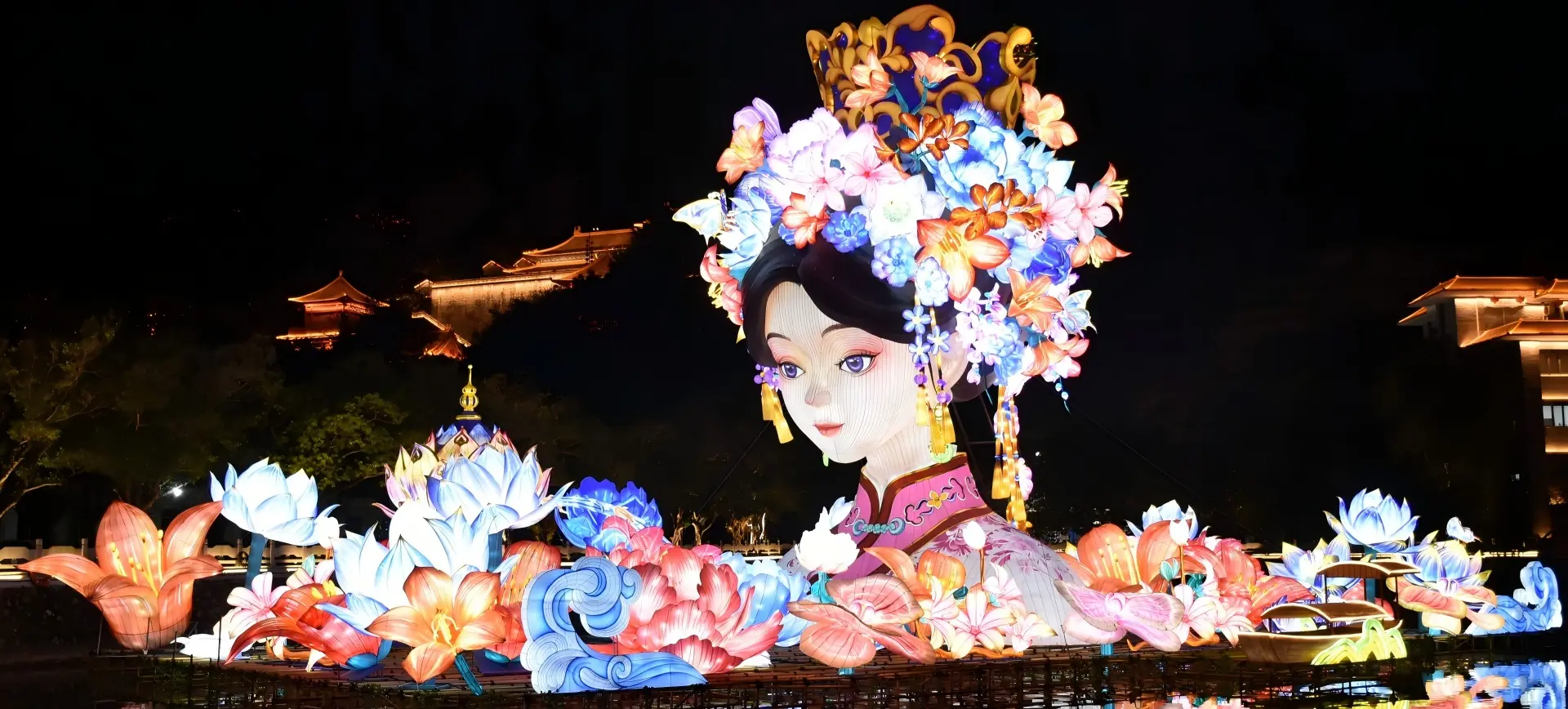
For many parks, zoos, resorts, and visitor attractions, the most difficult part of the operating day begins when daylight disappears.
A venue may attract families throughout the afternoon, yet visitor numbers often decline quickly after sunset. Restaurants become quieter, retail areas receive less traffic, and large outdoor spaces that were active only hours earlier can become underused.
This is one reason nighttime entertainment has become an increasingly important part of destination planning.
Rather than simply adding decorative lighting to an existing venue, operators are increasingly looking at experiences that can give visitors a specific reason to arrive — or stay — after dark. Among these formats, large-scale lantern festivals have developed into a particularly flexible form of nighttime attraction.
From Decoration to Destination
The distinction between decorative lighting and a successful nighttime attraction is significant.
Decorative lights improve the appearance of a venue. A destination-scale light experience, however, gives visitors something to explore.
A well-planned lantern festival can combine illuminated sculptures, themed environments, large visual landmarks, interactive areas, photo opportunities, and carefully designed walking routes into a complete evening experience.
Instead of seeing one illuminated installation, visitors move through a sequence of scenes.
A park might begin with a large entrance display, continue through animal or botanical themes, introduce a dramatic centerpiece such as a dragon or giant illuminated structure, and then guide visitors toward food, retail, entertainment, and additional photo locations.
This changes lighting from background decoration into part of the attraction itself.
Why Nighttime Experiences Matter to Visitor Attractions
Outdoor venues have a structural advantage: they already possess space.
Parks, zoos, botanical gardens, resorts, fairgrounds, and scenic attractions may have pathways, open lawns, plazas, trees, lakes, or landscaped environments that can support temporary nighttime programming without requiring construction of an entirely new permanent attraction.
The challenge is using those spaces effectively after dark.
A large-scale light festival can potentially help a venue:
- extend useful operating hours into the evening;
- create a separate seasonal or ticketed experience;
- attract families and groups looking for evening activities;
- encourage visitors to spend more time at the destination;
- create additional opportunities for food, beverage, merchandise, and other secondary spending;
- reactivate areas that otherwise generate little value at night.
The commercial opportunity therefore extends beyond admission alone.
When visitors stay longer, the entire venue has more opportunities to participate in the nighttime economy.
The Experience Is Built Around a Journey
One of the most important differences between a collection of illuminated decorations and a professionally planned festival is the visitor route.
People need a reason to continue walking.
A strong route uses visual landmarks to pull visitors forward while alternating between large spectacle pieces, smaller themed displays, interactive areas, and places where guests naturally stop.
This is especially important for family audiences.
If every installation has approximately the same visual scale, the experience can quickly become repetitive. In contrast, changing scale and atmosphere creates anticipation.
A relatively intimate illuminated pathway might lead toward a giant centerpiece. A dense forest of smaller lights might open into a large themed scene. A quiet section might be followed by an interactive installation or a major photo location.
These transitions create rhythm.
They also influence visitor flow, dwell time, congestion, and the number of locations where people stop to take photographs.
Photo Opportunities Have Become Part of Attraction Design
Modern visitor attractions are experienced twice: once at the venue and again through the photographs and videos visitors share afterward.
That has changed the role of visual design.
Large illuminated tunnels, oversized animals, dragons, flowers, fantasy environments, and other recognizable structures can function as natural social-media landmarks.
Visitors do not need to be instructed to promote the event. If a scene is visually distinctive enough, people photograph it because they want to.
For operators, this means the physical attraction can generate digital visibility beyond the venue itself.
The most effective installations therefore consider not only how a structure appears from the walking route, but also where visitors will stand, what will appear behind them, how groups can photograph themselves, and whether the scene remains visually recognizable in short-form video.
Seasonal Attractions Can Be Designed for Reuse
Temporary does not necessarily mean disposable.
Large outdoor light displays can be engineered as modular structures that are assembled for an event, dismantled afterward, stored, and potentially reused in future seasons.
This creates several possibilities.
A venue can retain major signature pieces while changing part of the route each year. Displays can be rearranged into a different sequence. New themes can be introduced around existing installations.
The objective is to maintain enough familiarity to preserve operational efficiency while adding enough novelty to give returning visitors a reason to come back.
For venues planning recurring annual events, this can be considerably more useful than treating every season as an entirely new one-off installation.
Successful Festivals Require More Than Visual Design
Spectacle attracts attention, but large outdoor installations also require practical engineering.
Commercial installations must account for weather exposure, structural stability, electrical systems, installation access, transportation, maintenance, visitor circulation, and site conditions.
For international projects, another consideration is how large structures are divided into modules for shipping and then reconstructed efficiently at the destination.
Pre-installation and testing before shipment can reduce uncertainty on site by allowing teams to inspect structural connections, lighting systems, assembly sequences, and individual components before final delivery.
This operational side of a festival is rarely what visitors notice, but it is essential to delivering the experience they eventually see.
Different Venues Need Different Festival Strategies
There is no universal lantern festival layout.
A zoo may naturally build themes around wildlife, insects, oceans, dinosaurs, or conservation stories.
A botanical garden can integrate illuminated flowers, plants, butterflies, and fantasy landscapes into existing vegetation.
A theme park may emphasize larger spectacle pieces and interactive environments.
A resort may prioritize atmosphere, photography, guest dwell time, and integration with dining or hospitality.
Municipal venues and scenic areas may use festivals to activate public spaces, support seasonal tourism, or create recognizable annual events.
The strongest concepts therefore begin with the venue rather than with a catalogue of available displays.
Design follows the audience, physical site, operating model, season, route, and commercial objective.
A Growing Role in the Nighttime Economy
The broader opportunity is not simply about lights.
It is about converting existing physical spaces into experiences that remain commercially and socially active after sunset.
As destinations compete for visitor attention, nighttime programming provides operators with another way to use infrastructure they already have while creating an experience that feels different from daytime admission.
Lantern festivals fit particularly well into this model because they can combine art, entertainment, cultural storytelling, photography, family activity, and large-scale visual spectacle within the same route.
For parks and visitor attractions, the question is increasingly shifting from “How should we decorate the venue at night?” to a more strategic one:
“What experience would make people specifically choose to visit us after dark?”
That shift — from decoration to destination — is what makes large-scale lantern festivals increasingly relevant to the next generation of nighttime attractions.
About HOYECHI / ParkLightShow
HOYECHI provides custom lantern festival displays and outdoor light show project solutions for parks, zoos, scenic areas, resorts, cities, and commercial venues. Through ParkLightShow, the company supports projects from concept design and custom production to modular manufacturing, pre-installation testing, international delivery, and installation support.
For venues exploring a ticketed nighttime attraction, ParkLightShow provides project-based solutions designed around the site, visitor route, theme, installation requirements, and long-term operating objectives.


