Capturing Holiday Moments: Why Families Love Coordinated Christmas Pajamas
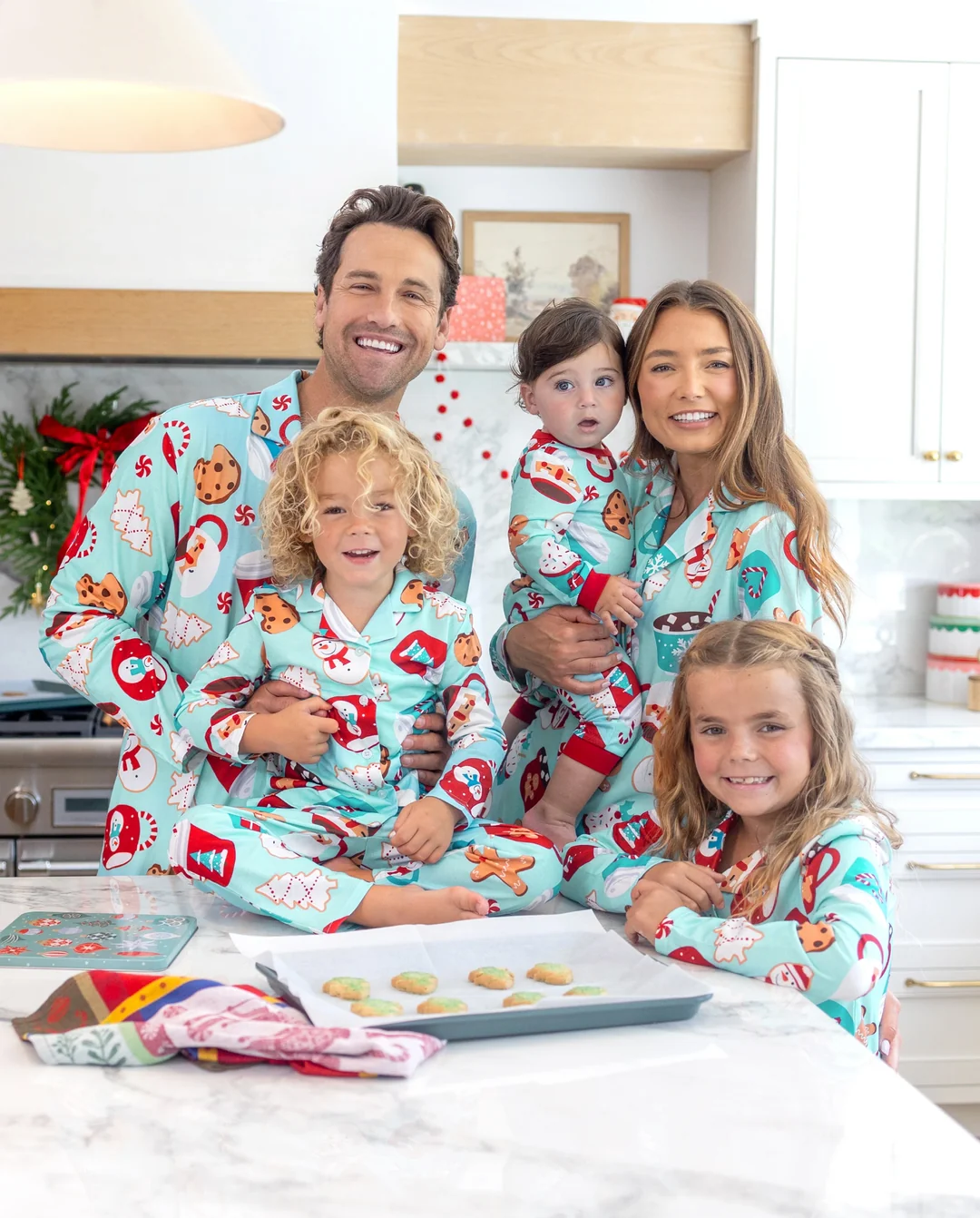
The photograph everyone remembers is rarely the one that looked most organized while it was being taken. It may be the frame just before the official picture, when one child is laughing at something outside the camera and another is still trying to find a slipper. It may come ten minutes later, when presents have begun to migrate across the floor and nobody is thinking about posing anymore. Holiday photographs become meaningful because they capture change: the way children grow, who joined the gathering that year, which traditions stayed, and which small details appeared only once.
The result is closer to a visual story than a single holiday portrait. One image might show everyone ready at the beginning of the evening; another catches children decorating something; the next is quieter, with people sitting beside the tree after the excitement has slowed down. There is continuity without repetition. Families browsing christmas pajamas can think about that sequence before choosing a style. A successful shared look does not have to make every photograph identical. It simply needs enough color or pattern continuity to connect the changing moments while leaving room for different ages, personalities, activities, and expressions.
The Story Starts Before Anyone Looks at the Camera
The few minutes before a planned photograph can be more revealing than the pose itself. Someone is adjusting a sleeve, children are negotiating where to sit, a parent is moving a toy out of the way, and the youngest family member may have no interest in the plan at all.
Keep a few of those frames.
Photograph people getting ready rather than waiting until everyone is ready. A child helping a sibling, an adult carrying mugs into the room, or someone turning on the tree lights can establish the beginning of the evening. Later photographs will feel more meaningful because the album contains a starting point rather than only the finished group portrait.
Repetition Gives a Photo Series Its Rhythm
Visual storytelling often relies on something that appears again and again. In a holiday album, that might be a tree, a ribbon color, the same decorated room, or a repeated clothing print.
The useful part of coordinated sleepwear is that the repeated detail moves with the family. People can leave one room, change positions, sit at a table, or gather near the tree, yet the photographs remain visually connected.
There is no need to repeat every accessory as well. When the clothing already provides a recognizable motif, familiar slippers, individual hairstyles, and different surrounding layers can remain personal. The photographs gain continuity without becoming copies of one another.
Movement Usually Makes the Frame More Interesting
Children are rarely at their most natural when being told to hold a smile. Giving them something simple to do can create stronger pictures.
Let them carry an ornament, choose a holiday book, pass a gift, or look through old photographs together. Adults can talk rather than constantly face the camera. A pet can sit wherever it naturally settles instead of being repeatedly moved into a perfect position.
The shared clothing keeps the visual idea clear even when people are looking in different directions. What might seem imperfect in the moment often becomes the detail that gives the photograph personality later.
One Light-Blue Print Can Connect Several Different Frames
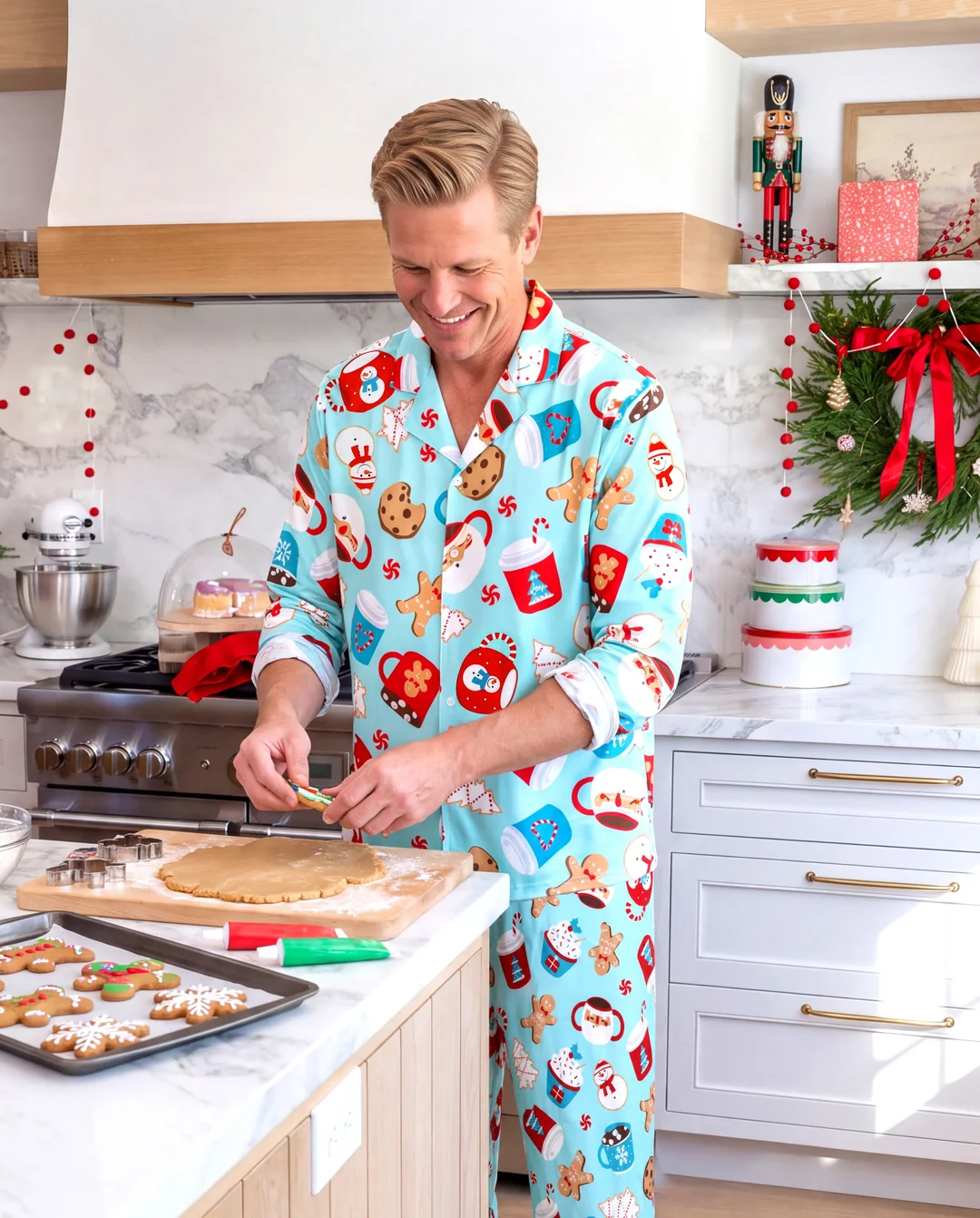
A current PatPat example is Christmas Matching Family Pajamas Mug & Gingerbread Print Blue, shown in Light Blue. The U.S. listing currently offers wearer selections for women, kids, babies, men, and pets and is presently marked out of stock, so availability should be rechecked near purchase. Adult and child pajama selections use a long-sleeve top and full-length pants format, while the page identifies the baby option as a one-piece romper. The design combines a light-blue background with gingerbread figures, candy canes, and red-and-white holiday accents.
Its practical selling points include:
- Women, men, kids, baby, and pet selections: several household members can share the same visual theme.
- Light-blue gingerbread design: gingerbread figures, candy canes, and red-and-white accents give the print an immediately recognizable holiday identity.
- Long-sleeve tops and full-length pants: used for the two-piece pajama selections.
- Baby romper option: the product FAQ identifies baby sizes as one-piece rompers rather than the adult-style two-piece construction.
- Matching Christmas socks: listed among the set details.
- Flat seams and a heat-pressed tagless label: construction details stated on the current page.
- Pre-shrunk construction: also listed for the style.
- Soft stretch knit: the material description currently provided without an exposed fiber-percentage breakdown.
- Simple care: machine wash cold and tumble dry low; the page says to avoid bleach and dryer sheets.
The combination works visually because the blue base can remain recognizable as the family moves through differently lit rooms, while the red-and-white details preserve an obvious Christmas connection. The print can link the frames without requiring every photograph to use the same pose or backdrop.
Let the Background Change as the Evening Changes
A holiday album becomes more interesting when every photograph is not taken beside the same tree.
The kitchen can capture the active part of the evening. A hallway may catch children moving between rooms. A couch works for the quieter middle. The tree can be saved for the more traditional portrait rather than appearing behind every frame.
Moving through the house also creates natural changes in light and composition. A bright kitchen picture can sit beside a softer living-room image and still feel connected because the people and recurring visual details carry the story.
Photograph the People Who Are Usually Behind the Phone
Family albums often have one predictable problem: the person taking the pictures appears in very few of them.
Set a timer, hand the phone to another adult, or rotate who takes photographs. A technically imperfect frame that includes everyone can be more valuable years later than another polished picture missing the person who documented the entire holiday.
Do the same with small combinations. Photograph grandparents with grandchildren, siblings without adults, parents together, or cousins who see each other only occasionally. The full-family picture is only one part of the story.
The Quiet Frame Deserves a Place Beside the Funny One
Not every photograph needs laughter or high energy.
The end of the evening may offer completely different images: a child listening to a story, someone looking at the tree, siblings sitting together after presents have been opened, or an adult carrying a sleepy child toward bed.
These frames give the album emotional range. Without them, the holiday can look like one uninterrupted burst of excitement when the real evening probably moved between noise, conversation, activity, tiredness, and calm.
Christmas Family Pajamas Can Link More Than One Generation
A shared visual idea becomes especially useful when christmas family pajamas bring several generations into the same set of photographs. Grandparents, parents, children, babies, and other relatives do not need to pose in every frame together for the album to feel connected.
One picture can contain the grandparents and children; another may show siblings; a later image might include everyone. The repeated motif makes those combinations feel like parts of one larger gathering.
It also gives families freedom to let participation change. Someone may add a robe later, a teenager may disappear from several photographs, or an older relative may join only for the beginning of the evening. The story does not stop because every person is not visible in every frame.
Children’s Sleepwear Still Needs Its Own Fit Check
A strong photograph is never a reason to ignore the intended fit of a child's garment. U.S. Consumer Product Safety Commission guidance sets specific requirements for children's sleepwear, including qualifying infant garments and tight-fitting styles. Tight-fitting sleepwear is defined through particular garment dimensions and labeling requirements. (cpsc.gov)
Parents should use the exact garment's size chart and labels rather than deliberately choosing oversized sleepwear simply because looser clothing seems easier for a photograph or might last another season.
The adults can organize the visual theme. A child's sleepwear fit should still follow the garment's actual guidance.
Leave One Photograph Completely Unplanned
After taking the picture everyone expected, stop directing the group.
Put the phone somewhere accessible and wait. Someone may start telling a story, children may return to their game, or people may gather around food. Take one photograph only when something naturally catches your attention.
That final image may not be centered. Someone may be partly out of frame. The room may look less tidy than it did earlier.
It may also be the photograph that most accurately remembers the evening.
A Holiday Album Becomes More Valuable With Time
The first year, families notice the pajamas, decorations, and children's expressions. Several years later, different details begin to matter.
The room may have changed. A child who once needed to be held is now nearly as tall as a parent. A relative may have joined the gathering for the first time, or an old tradition may have quietly disappeared. Clothes that seemed like a playful seasonal choice become date markers inside a much larger family story.
That is why holiday photography does not need perfection to become meaningful. It needs continuity and enough space for real life to enter the frame.
Coordinated sleepwear can provide one piece of that continuity. The deeper story comes from everything changing around it—the people moving, children growing, rooms filling and emptying, laughter arriving at unexpected moments, and one Christmas gradually becoming part of the family's visual history.