Room-Specific Wall Soundproofing Plans: Bedrooms, Home Offices, Apartments, and Shared Walls
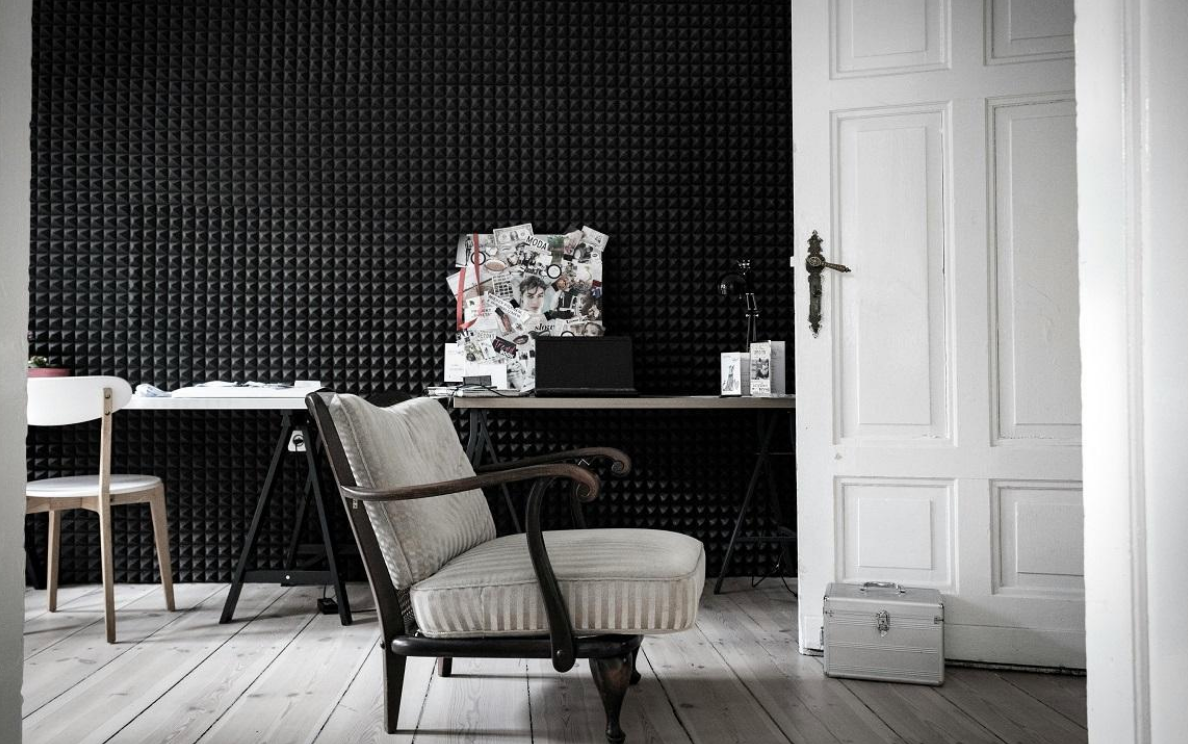
Highlights:
- Different rooms need different soundproofing strategies — a bedroom requires mass and sealing, while a home office also needs internal echo absorption and shared-wall decoupling.
- The acoustic insulation market is hitting $18.76B in 2026, reflecting how seriously builders, renters, and homeowners are now treating noise control as a necessity, not a luxury.
- Reducing acoustic distractions can boost focus-task productivity by 30–50%, making home office soundproofing a legitimate financial investment, not just a comfort upgrade.
- Renters aren’t out of options — freestanding panels, packed bookshelves, acoustic door seals, and peel-and-stick panels can all move the needle without touching permanent fixtures.
- Shared walls require a three-part approach (decoupling + mass + cavity insulation) because sound travels around walls through floors, ceilings, and framing — not just through them.
There’s nothing more frustrating than lying in bed wide awake because your neighbor’s TV is bleeding through the wall, or trying to focus on a work call while someone blasts music two rooms over. Noise is one of those things we put up with until we just… can’t anymore.
The good news? You don’t have to gut your walls or spend a fortune to fix this. But here’s the thing most people miss: not every room needs the same solution. A bedroom has completely different soundproofing needs than a home office or an apartment with paper-thin shared walls. Getting room-specific about your approach is what separates a genuinely quieter space from a frustrating waste of money.
Here’s what the data — and a lot of practical experience — says about tackling sound wall by wall, room by room.
Why Noise Is a Bigger Problem in 2026 Than Ever Before

Before we dive into the room-by-room breakdown, it’s worth understanding why this matters more now than it used to.
The global acoustic insulation market is estimated to hit USD 18.20 billion in 2026 and is forecast to climb to nearly USD 24.77 billion by 2033, growing at a compound annual rate of 4.5%. That’s not just a product trend — it reflects a real shift in how seriously people are taking noise control at home, in offices, and in new construction.
A big driver of that shift? Remote work. Research shows that when acoustic distractions are meaningfully reduced — whether through sound masking, architectural changes, or personal noise-mitigation tools — productivity on focus-heavy tasks can increase by as much as 30 to 50 percent. That’s a staggering productivity gap, and it’s pushing more people to take their home acoustics seriously.
Put simply: the walls around you matter more than they ever did.
Bedroom Walls: Your Sleep Is Non-Negotiable
Your bedroom is your recovery zone, and sound is one of the most underestimated sleep disruptors. The challenge with bedroom walls is that they often need to block two different types of noise: airborne sound (voices, TV, music) and the low-frequency rumble that seeps in from traffic or HVAC systems.
What actually works in a bedroom:
- Mass Loaded Vinyl (MLV) — This is the workhorse of bedroom soundproofing. It’s dense, flexible, and can be installed behind drywall or hung directly on existing walls. It’s especially effective against mid-range noise frequencies.
- Acoustic drywall (double-layered) — Adding a second layer of drywall with a damping compound like Green Glue sandwiched in between dramatically increases the wall’s Sound Transmission Class (STC) rating.
- Sealing gaps — This one gets ignored constantly. Sound flows through gaps like water. Electrical outlets, baseboards, and wall penetrations all need acoustic sealant. A wall with great materials but unsealed gaps will still let noise in.
For bedrooms where outside traffic noise is the culprit, a combination of MLV + Green Glue compound between drywall layers + acoustic sealant on all penetrations is the gold standard. If you’re renting or don’t want to touch the walls, heavy floor-length curtains on exterior walls and bookshelves packed with books on shared walls offer a non-invasive (if partial) alternative.
Home Office Walls: Because “Just Use Headphones” Isn’t a Real Solution
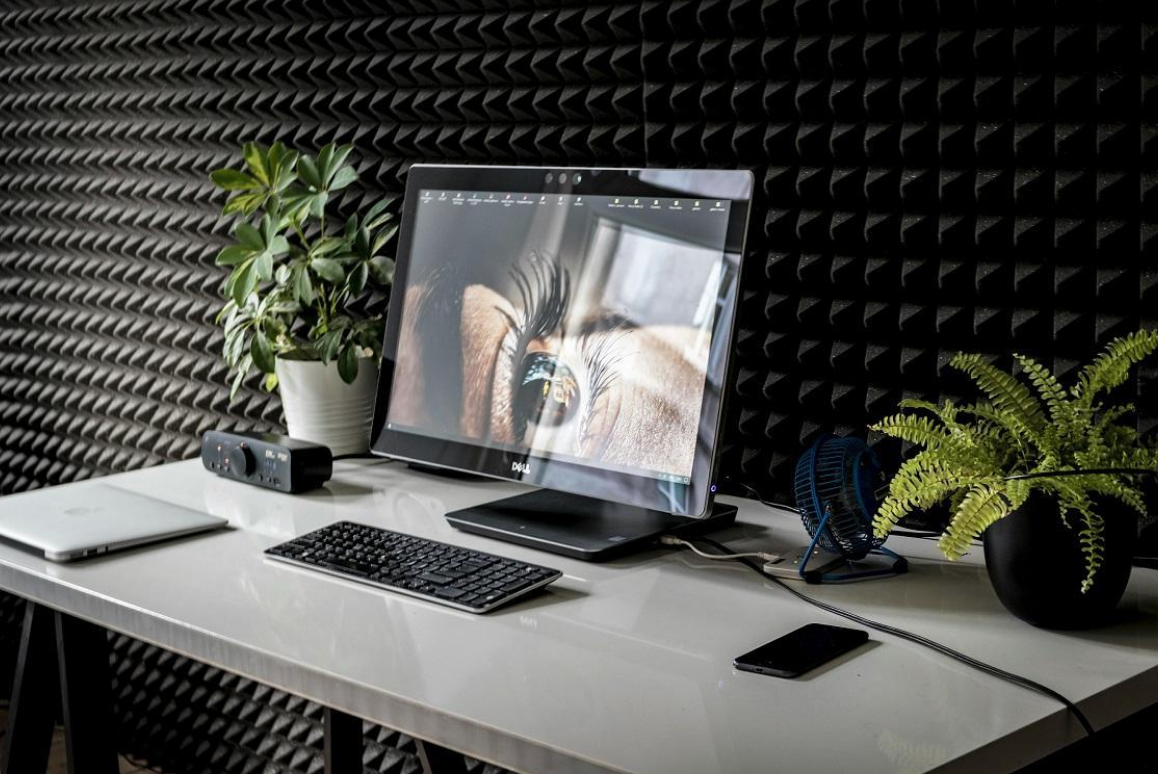
If you work from home, your office walls are directly tied to your income. Noise isn’t just annoying — it’s affecting your output, your professionalism on calls, and your ability to focus.
The stat above about 30–50% productivity gains from better acoustics isn’t abstract. It means that treating your home office walls as an investment — not a luxury — is a completely rational financial decision.
What to prioritize in a home office:
- Absorption vs. blocking — Most people think soundproofing means blocking sound from getting in. In a home office, you also need to think about echo inside the room. Hard walls bounce sound around, which makes your voice sound hollow on calls and makes it harder to focus. Acoustic panels or foam on at least two walls will handle this.
- The shared wall — If your office shares a wall with a living room, kitchen, or garage, that’s your problem wall. This is where you’ll want MLV or resilient channels + additional drywall to break the structural connection through which sound travels.
- Doors and windows — Walls are only part of the equation. A solid-core door and weatherstripped door frame will do as much work as treating the walls themselves in many cases.
For a more detailed walkthrough on materials, assembly methods, and what each approach actually costs, the complete guide to DIY wall soundproofing breaks it all down step by step — including which methods give you the best STC improvement per dollar.
Apartment Walls: Working Within the Rules (and the Budget)
Apartment soundproofing is its own category entirely, because you’re dealing with two constraints that homeowners don’t have: you probably can’t open up walls, and your lease may limit what you can permanently attach to surfaces.
The market data reflects how serious this problem has gotten. Building codes are increasingly mandating minimum acoustic insulation between dwelling units — particularly party walls and floors — as noise complaints have become one of the most cited issues in dense residential construction. The retrofit sub-segment is also growing, as building owners upgrade existing properties to remain competitive.
That said, even if your building hasn’t been retrofitted, you have options.
Renter-friendly approaches that actually move the needle:
- Freestanding acoustic panels — These are the easiest win. You can position them against problem walls, they require zero installation, and you take them with you when you move.
- Bookshelf walls — A fully loaded bookshelf against a shared wall adds mass and diffusion. It’s not a complete solution, but it takes the edge off significantly.
- Acoustic wallpaper and peel-and-stick panels — These products have gotten dramatically better in the last couple of years. They won’t block loud party noise, but they reduce the harshness of transmitted sound and echo inside the room.
- Door sweeps and acoustic door seals — Apartment doors are almost always the biggest acoustic weak point. A good door sweep and a compression seal around the frame can make a noticeable difference for under $50.
If your landlord does allow modifications, adding a second layer of drywall with damping compound is the single highest-impact upgrade you can make without demolition. Check your lease, get permission in writing, and move forward.
Shared Walls: A Different Kind of Problem
Shared walls — whether between a bedroom and a living room, two units in a duplex, or a garage and a living space — need a fundamentally different approach than exterior walls. The reason: flanking paths.
Sound doesn’t just go through a wall. It travels around it, through the floor, ceiling, and structural framing that connects the two spaces. This is why you can treat a shared wall heavily and still hear your neighbor clearly — the sound is bypassing the wall entirely through the building’s structure.
How to address shared walls properly:
- Decouple the wall — Resilient channels or sound isolation clips physically break the connection between the wall surface and the studs. This stops structure-borne vibration from transmitting directly into the room.
- Add mass — Every pound per square foot added to a wall improves its blocking ability. This is where MLV, extra drywall layers, or specialty acoustic drywall products come in.
- Fill the cavity — If you’re opening the wall at all, acoustic mineral wool insulation (like Rockwool Safe’n’Sound) in the cavity dramatically reduces the airborne sound that gets through.
- Don’t forget the perimeter — The edges where the wall meets the floor and ceiling are flanking paths. Acoustic sealant in those joints is a small effort with a real payoff.
The combination of decoupling + mass + absorption is called the “mass-air-mass” principle, and it’s the foundation of every professional soundproofing installation. You don’t have to do all three perfectly — but the more of them you hit, the more effective your result will be.
Matching the Fix to the Room: A Quick Reference
Here’s a simple way to think about it before you buy anything:
| Room | Primary Noise Type | Top Priority Fix |
| Bedroom | Airborne + low-frequency | MLV + damped drywall + sealing |
| Home Office | Airborne + echo | Absorption panels + shared wall treatment |
| Apartment | Airborne (neighbor noise) | Freestanding panels + door seals + bookshelf mass |
| Shared Walls | Structure-borne + airborne | Decoupling + mass + cavity insulation |
No room is a lost cause. Even if you’re renting a shoebox apartment with the thinnest walls imaginable, there are steps you can take today that will make a real difference.
Final Thoughts: Start With Your Worst Wall
You don’t have to tackle the entire house at once. The most practical approach is to identify your worst wall — the one responsible for the most disruption to your sleep, work, or sanity — and start there.
Get clear on what type of noise you’re dealing with (airborne vs. impact vs. low-frequency rumble), what your constraints are (renter vs. owner, budget, tolerance for disruption), and then match your materials to the problem. That’s the approach that actually works, room by room, wall by wall.
The noise around us isn’t going anywhere — but with the right plan, your home can still be your quiet place.