
How to Prepare Furniture for Long-Distance Moving Without Damage
Moving across the country, or even just a few states over, puts furniture through a serious workout. Bumpy roads, sharp turns, extreme temperatures, and multiple loading and unloading cycles all take their toll.
The difference between furniture that arrives looking exactly like it left and furniture that arrives scratched, warped, or broken almost always comes down to preparation. Knowing how to prepare furniture for long-distance moving before the truck pulls up is the single most important thing you can do to protect your belongings.
This guide breaks down everything from disassembly and packing materials to labeling and in-transit protection: practical, no-fluff advice for anyone tackling long-distance furniture moving.
Take Stock Before You Start Packing
The first step in any successful move is not grabbing bubble wrap. It’s knowing exactly what you’re dealing with. Walk through every room and assess each piece of furniture with fresh eyes. Ask yourself:
- Can it be disassembled? Bed frames, desks, bookshelves, and sectional sofas should almost always be taken apart before a long haul.
- How fragile are the surfaces? High-gloss lacquer, veneer, and glass surfaces need far more protection than solid wood or metal.
- Is it worth moving at all? Old, inexpensive, or heavily worn pieces sometimes cost more to move safely than they’re worth replacing.
Once you have a clear picture, create a simple inventory list. Note which pieces need hardware bags, which need blankets, and which need custom crating. Many long-distance moving services will also do a pre-move walkthrough or consultation, and having this inventory ready makes those conversations much more productive.
This kind of planning might feel excessive for a local move, but for moving furniture long-distance, it’s essential. Trucks travel hundreds of miles over one to two days, and every unsecured corner or exposed surface will show it.
Disassembly: The Step Most People Skip
Disassembling furniture isn’t just about fitting things into the truck. It significantly reduces the risk of structural damage during transit. Large, assembled pieces are harder to pad, shift more during movement, and are far more likely to catch on door frames during loading and unloading.
How to Disassemble Without Losing Hardware
Start with the hardware. Every screw, bolt, and washer should go into a labeled zip-lock bag, then be taped directly to the piece it belongs to. Nothing is worse than arriving at a new home and spending hours hunting for the right bolts.
For flat-pack furniture (think IKEA-style pieces), take photos before you disassemble. The assembly instructions might not be on hand at the destination, but a quick photo log takes 60 seconds and saves hours of frustration.
Remove all legs from sofas, dining tables, and coffee tables. Detach headboards and footboards from bed frames. Collapse or remove shelving from bookcases. Glass shelves and tabletops should always be transported separately from their frames, never stacked on top of the main piece during a long haul.
Furniture Disassembly Cheat Sheet
| Furniture Type | What to Remove | Special Considerations |
| Bed frame | Headboard, footboard, slats | Bag all hardware; bundle slats with rope |
| Dining table | Legs, glass inserts | Wrap the glass separately in moving blankets |
| Sectional sofa | Legs, connecting hardware | Keep sections paired with masking tape labels |
| Bookshelf | Adjustable shelves | Tape shelves together in groups of 3-4 |
| Dresser | Drawers, mirror | Empty drawers completely; wrap the mirror in cardboard |
| Desk | Legs, removable top | Coil and tape any cables still attached |
Wrapping Materials: Match the Protection to the Surface
Generic advice like “use moving blankets” doesn’t go far enough when figuring out how to prepare furniture for long-distance moving. Different surfaces need different treatments, and using the wrong material can cause damage. Plastic wrap, for example, can trap moisture against wood finishes over a multi-day trip.
What to Use on Wood, Fabric, Metal, and Glass
- Wood furniture (hardwood, veneer, and painted surfaces) should be wrapped in moving blankets or furniture pads first, then secured with packing tape applied only to the blanket, never directly to the wood. Tape adhesive can peel finish right off.
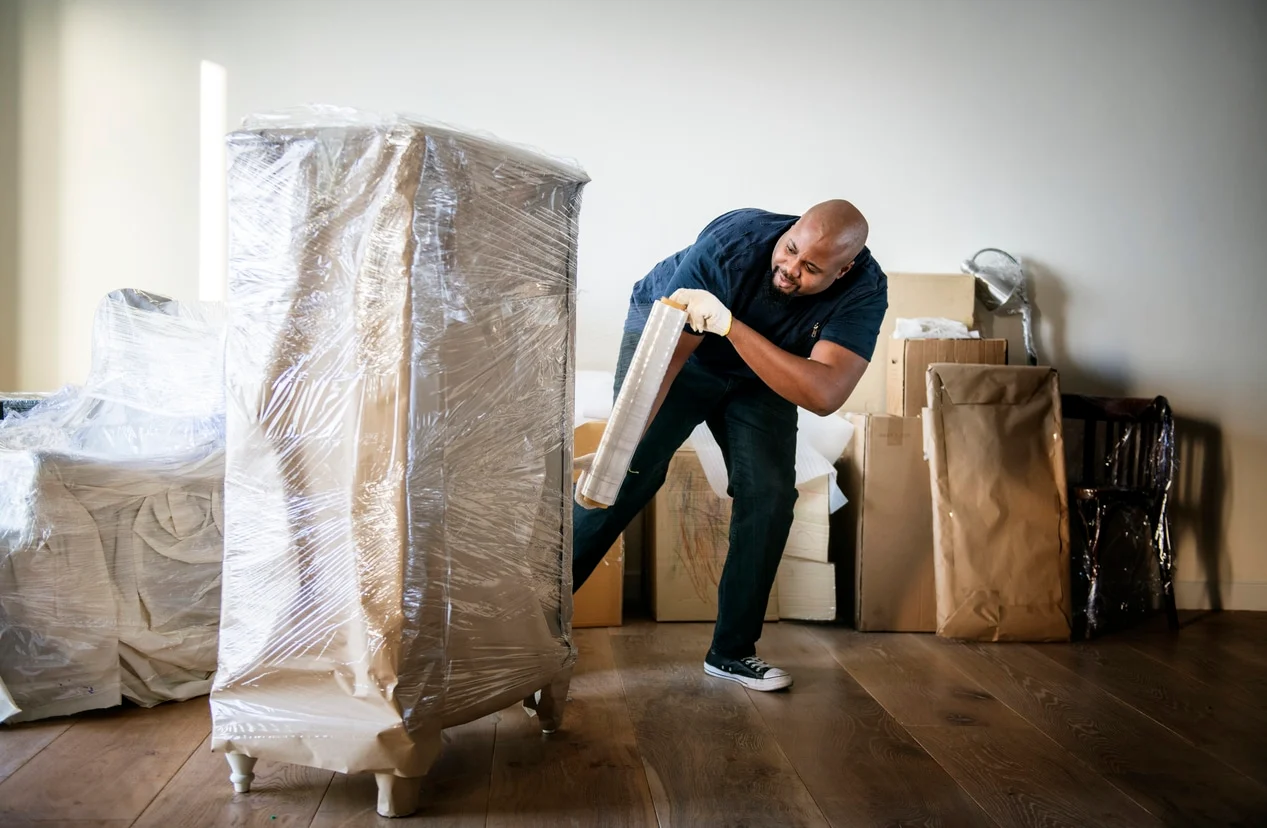
- Upholstered pieces like sofas and armchairs need plastic stretch wrap to keep fabric clean, but only over the blanket layer. Direct plastic on fabric over a long trip can cause sweating and mildew in humid conditions.
- Metal furniture and frames are durable but prone to scratching other surfaces. Wrap exposed corners and edges with foam corner guards or thick cardboard, secured with packing tape.
- Glass surfaces (tabletops, cabinet doors, mirrors) need their own dedicated treatment:
- Apply a large X of painter’s tape across the surface to help hold it together if it does crack
- Wrap in paper, moving pads, or several layers of kraft paper
- Place between two pieces of cardboard, then secure with tape
- Mark clearly: GLASS – FRAGILE – DO NOT LAY FLAT
Loading the Truck and Protecting Furniture in Transit
Packing materials only do part of the job. How furniture is loaded into the truck determines what happens when the vehicle hits a pothole at 65 mph.
Weight Distribution and Securing Large Pieces
The golden rule for long-distance furniture moving is: heavy and flat pieces go against the walls, lighter and fragile items go in the center. Dressers and bookcases should always travel upright, not on their backs. Laying them flat shifts the structural stress to parts not designed for it.
Use moving straps or ratchet tie-downs to anchor large pieces to the truck’s interior walls. Blankets between stacked pieces prevent surface-to-surface contact, which is where most scratching happens. Do not rely on stacking alone to hold things in place. Even well-packed items will shift on a cross-country drive.
A few additional tips for protecting furniture during transit:
- Fill empty dresser cavities with soft items like linens or clothing to prevent drawers from shifting and add cushioning from inside
- Place cardboard between glass surfaces and any adjacent items, even padded ones
- Keep a small toolkit (screwdrivers, Allen keys) accessible in the cab for any quick fixes at rest stops or during unloading
How Climate Affects Furniture on Long Hauls
Long-distance moves often mean passing through different climate zones. Solid wood furniture is particularly sensitive to humidity changes and can swell, crack, or warp if exposed to extreme moisture or heat for extended periods. If the move involves a multi-day drive through humid southern states in summer, it’s worth asking the long-distance moving services you’re considering whether they offer climate-controlled truck options or temperature-regulated moving pods.
Antiques and high-value pieces may genuinely warrant that upgrade. The cost difference is usually far less than a professional repair or restoration job once damage is done.
Documenting and Labeling Everything Before the Truck Leaves
One of the most overlooked parts of preparing furniture for long-distance moving is documentation. Before anything gets loaded, photograph every piece from multiple angles, including close-ups of any existing scratches or dents. This is critical if a damage claim needs to be filed later.
Label every wrapped and padded item with its destination room to ensure efficient unloading and that nothing ends up in the wrong place. Keep all hardware bags in a single labeled box that travels in the cab, not in the cargo area. Hardware is small, light, and very easy to lose during a long haul.
If using a moving company, ask specifically about their claims process for furniture damage and what their liability coverage actually includes. Most standard moving insurance is based on weight, not replacement value. A dining table might weigh 40 lbs, but cost $1,200 to replace.
What to Verify in the Truck Before the Move-Out
Before the moving truck pulls away, spend five minutes on a last walkthrough of the loaded cargo. Check that all disassembled hardware is bagged and attached to the correct piece. Confirm that no bare wood, metal, or glass surfaces are exposed without padding. Verify that large pieces are strapped to the truck walls and that fragile items are clearly marked and separated from heavy ones.
Moving furniture long distance doesn’t have to mean arriving at a new place with damaged goods and a repair bill. With the right preparation, careful disassembly, proper materials, smart loading, and thorough documentation, most furniture makes the trip without a scratch. The time invested before the move always costs less than dealing with damage after it.


