Why have rotoforming machines gained recognition in the modern plastics industry? Analysis of the phenomenon
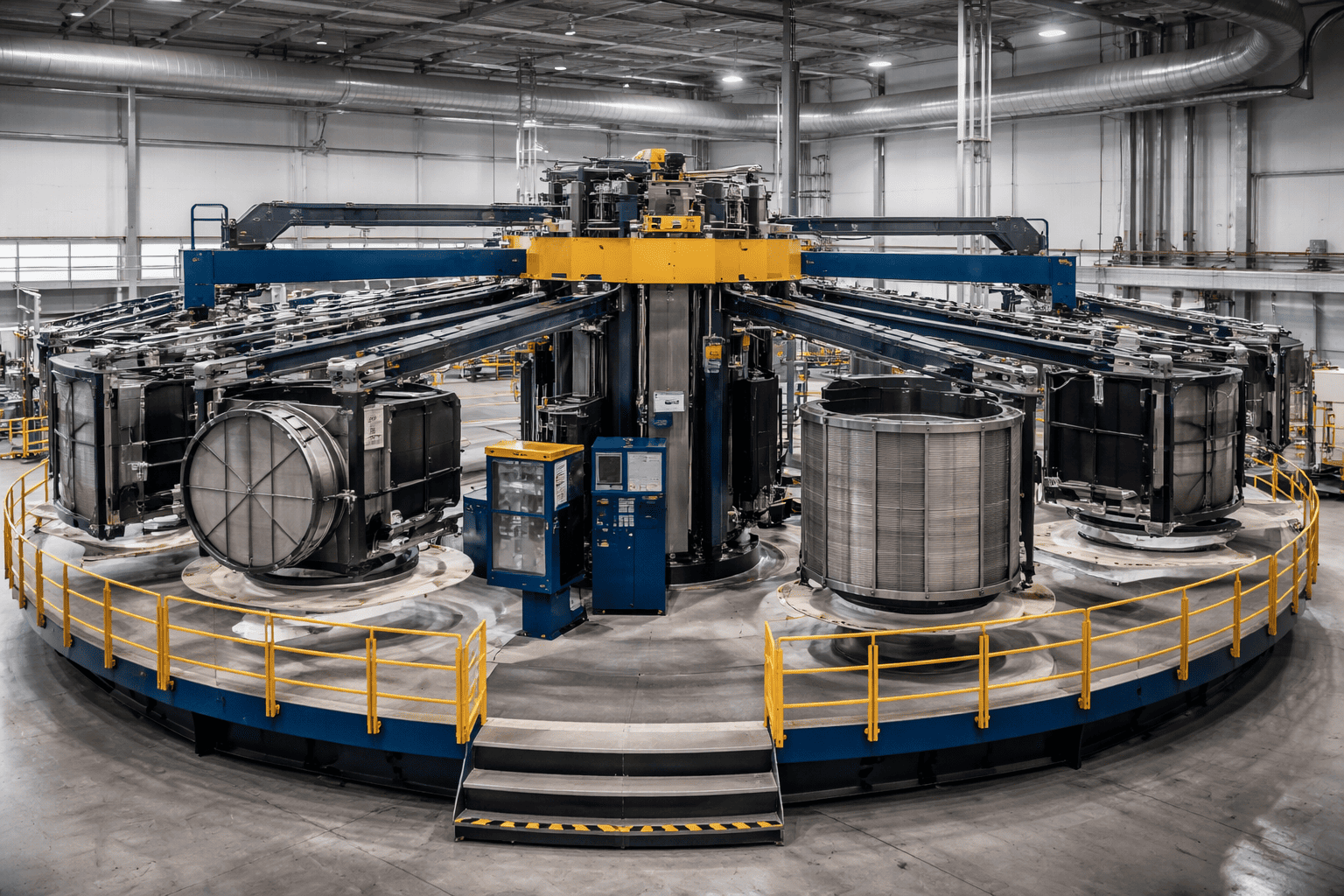
Rotoforming, also known as rotational molding, has become one of the key methods of manufacturing plastic products. The popularity of this technology is not a coincidence, but the result of many years of development, adaptation to market needs, and specific process advantages. The article discusses the sources of this phenomenon, pointing to the technological, economic, and design conditions that have influenced the widespread use of rotoforming machines in various industries.
Rotomolding as a response to the limitations of traditional methods
The origins of rotomolding date back to the first half of the 20th century, when a method was sought for producing hollow elements with uniform wall thickness. Traditional techniques, such as injection or blow molding, did not always allow this effect to be achieved without high tooling costs. Rotomolding machines filled this gap by offering a process based on slow rotation of the mold at elevated temperatures.
An important feature of this technology is the absence of high working pressure. This allows molds to be lighter and cheaper to manufacture, which is important for short and medium production runs. As a result, rotational molding began to be seen as a flexible solution, allowing rapid response to design changes without the need for significant investment.
With the development of polymer materials, this process has gained additional capabilities. Modern polyethylene powders are characterized by thermal stability and predictable behavior during melting. This has translated into high repeatability of product quality and reduced material losses, which has further strengthened the technology’s position in the market.
Technological and economic factors contributing to the growing popularity of machines
The growing interest in rotomolding machines is due to a combination of several key factors. From the manufacturers’ perspective, the ability to integrate multiple functions into a single production cycle is of significant importance. Rotomolded parts typically do not require additional welding or joining, which shortens the manufacturing process.
The most frequently cited advantages include:
- uniform wall thickness without internal stresses,
- great freedom in shaping complex geometries,
- the ability to produce large components,
- relatively low mold costs compared to injection molding.
The economics of the process play a particularly important role in sectors where durability and mechanical resistance are key. Industrial containers, tanks, and infrastructure components must meet stringent performance standards. Rotomolding machines enable the production of thick, uniform walls without the risk of structural weakening.
Against this backdrop, specialized machine designs have also been developed, offered, among others, by OREX-ROTOMOULDING, whose technological solutions are described in the context of industrial applications on the website https://orex-rotomoulding.com/, presenting an approach to the design and automation of the rotomolding process.
Popularity and challenges of rotational molding technology
Despite its numerous advantages, rotational molding technology is not without its limitations. The production cycle time is usually longer than in injection molding, which can affect profitability for very large volumes. The process also requires precise control of temperature and rotation parameters, as slight deviations can result in uneven material distribution.
An additional challenge is the limited range of materials suitable for rotational molding. Although polyolefins dominate here, other plastics require further research and process modifications. For this reason, the development of rotomolding machines continues to focus on improving energy efficiency, automation, and expanding material compatibility, which will be critical to maintaining their continued popularity in the industry.