Tips and Tricks for Liquidating Used RAM Memory Safely
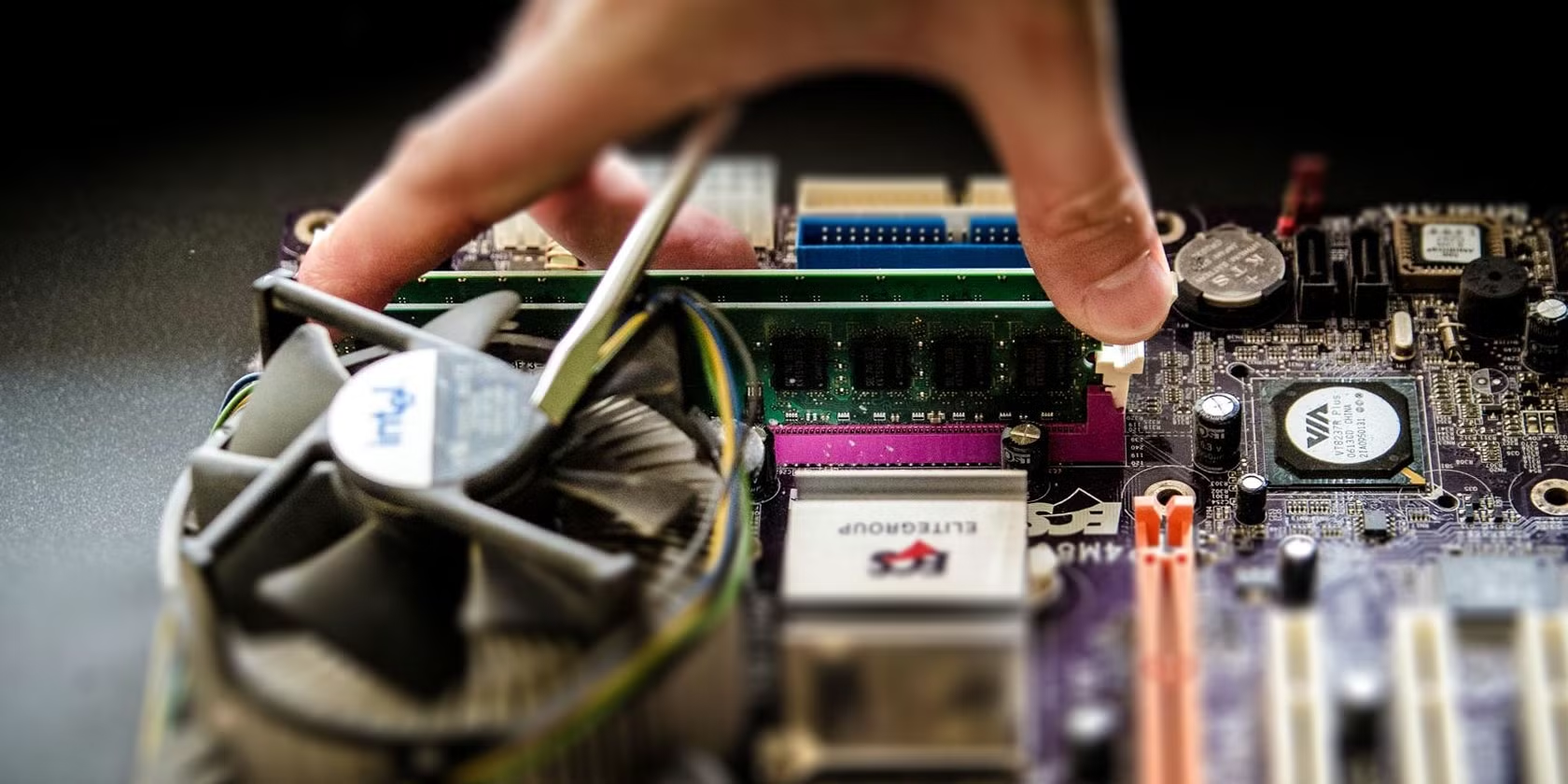
Selling bulk RAM can recover significant value, but results depend on timing, pricing, and process control. This article explains how market cycles influence returns and why selling during peak demand can improve outcomes.
It also outlines the benefits of organizing inventory into complete lots and working with multiple buyers to compare offers. You will learn how to avoid common pricing errors, handle packaging and shipping correctly, and maintain proper documentation. Compliance requirements and data handling practices are also covered.
Together, these factors shape a smoother transaction and help protect both value and accountability throughout the resale process.
How to Maximize Your Return on Bulk RAM Sales
Timing Your Sale with Market Prices
Price cycles make or break your returns. Analysts expect DRAM prices to peak around Q1 2026, then gradually decline from late 2026 and normalize closer to 2027-2028. You risk selling later at lower prices or writing off obsolete inventory if you hold excess RAM through the peak and into the downcycle.
When planning a safe liquidation strategy for used RAM, timing still plays a critical role. By leveraging insights from Big Data Supply, organizations can identify peak pricing windows such as Q2 2026 to maximize recovery value while minimizing risk.
However, selling during these highs can increase replacement costs, making it essential to model different financial scenarios in advance. For companies operating on aging 3 to 5-year infrastructure, smart timing and secure handling practices can help recover 15 to 30% of hardware refresh budgets without compromising data safety.
Market volatility cuts both ways. DRAM prices are elevated now, but long-term forecasts anticipate additional fab capacity that will eventually push prices down. Stockpiled inventory bought in a high-price environment may be worth nowhere near as much when sold later.
RAM prices fluctuate based on supply, demand, and generational relevance. Professional resellers track market movements and can advise on ideal selling windows. High-demand periods capture better rates. The perfect time becomes difficult to wait for as multiple price waves can hit within a single month.
Selling in Complete Lots vs. Separate Batches
Prepare a detailed inventory, get quotes from multiple enterprise buyers, sell in bulk lots, and time sales when DRAM market prices are high for your module types. Complete lots command premium pricing. Buyers prefer uniform specifications for deployment consistency, as we covered in inventory organization.
Separating batches reduces per-module value. Mixed lots require additional sorting and testing on the buyer’s end. Complete lots with matching specifications simplify logistics and increase your payout when you sell RAM through specialized channels like Big Data Supply.
Negotiating Better Rates for Large Volumes
Seek quotes from ITAD partners and specialist buyers to compare pricing, terms, and logistics support. Multiple quotes give you an advantage. Buyers compete for large volume deals, especially when modules match current market demand. Share your complete inventory details upfront.
Transparency speeds valuation and builds trust with buyers who handle enterprise-grade transactions on a regular basis. Payment terms range from immediate payouts to net terms, depending on the contract. Specialized buyers and ITAD companies that pay within days of receiving and testing modules provide cash flow and budget relief.
Avoiding Common Pricing Mistakes
Overvaluing equipment causes one of the most common frustrations. RAM prices fluctuate based on supply, demand, and generational relevance. Modules that were once premium may lose value quickly once new technology emerges.
A market analysis helps establish fair expectations. Expert pricing recommendations help you avoid prolonged listings and missed opportunities to sell RAM while demand remains strong.
Buyers test modules, grade them by condition and resale potential, and finalize pricing. Their assessments typically get delayed without improving terms when you fight them. Professional valuations reflect current market realities, not what you paid originally.
The Secure Process for Selling Large RAM Volumes
You need to coordinate multiple moving parts when you sell RAM in bulk quantities. Let me walk you through each stage.
Getting Multiple Quotes from Buyers
You should request quotes from ITAD partners and specialist buyers to compare pricing and logistics support. Send your detailed inventory list to at least three different buyers at the same time. This creates competitive pressure and reveals which companies offer fair market rates versus those that lowball volumes.
BuySellRam.com responds within a few hours when you request a quote, with payment provided within one business day of merchandise receipt and testing. Value Smart Trading follows a similar pattern: send your inventory sheet, receive a quotation, confirm the deal, and ship.
Response speed matters. Buyers who take days to quote often take weeks to pay.
You should compare pricing and logistics support. Some buyers provide prepaid, insured shipping labels. Others require you to arrange transport. Factor these costs into your net return calculations when you sell my RAM through different channels.
Packaging and Shipping Bulk RAM Safely
Modules go in anti-static bags first. Used anti-static bags work fine as long as they’re intact. Wrap the bagged modules in bubble wrap. Place them in boxes with one-inch padding clearance between all dimensions of the shipped items. This spacing prevents impact damage during transit. You should never ship RAM in plain envelopes.
Padded envelopes with proper internal protection can work for small quantities, but bulk shipments need rigid boxes. Packaging for shipment requires care, and you should avoid boxes larger than needed.
You need enough padding to eliminate wiggle room for components inside. Many buyers provide boxes and packaging materials if required. Clear labeling on boxes prevents specification mismatches during receiving.
Maintaining Chain of Custody Documentation
Chain of custody requires each person who touches an item to sign for its possession. As modules pass from person to person, create a chain of receipts. You should document dates and everyone who handles every piece of equipment from collection through legal proceedings.
Knowing how to track protects you in case disputes arise about quantities shipped versus quantities received. Complete chain of custody tracking and detailed reporting come standard with professional ITAD programs.
Payment Terms and Processing Times
The buyer inspects and grades your modules, then you receive a final offer confirmation, testing summary, and payment within a few business days. BuySellRam.com pays as soon as one business day upon complete inspection.
This speed beats most alternatives by weeks. Payment methods vary. Some buyers use PayPal to protect sellers. Others prefer wire transfers for large transactions. International bank transfers support global deals with transparent processing.
Compliance and Risk Management for Volume Sales
Enterprise RAM sales trigger legal obligations that extend beyond simple asset transfers.
ITAD Requirements for Enterprise RAM
ITAD must support compliance with regulations like HIPAA for healthcare, GLBA for financial services, and state privacy laws by confirming that data-bearing devices are sanitized and documented properly.
US businesses must review the Resource Conservation and Recovery Act (RCRA) rules and state e-waste laws that govern how electronic components, including memory modules, are processed and recycled.
Partnerships with certified ITAD providers confirm compliance with standards such as R2v3 and e-Stewards. Industry research shows that the average cost of a data breach exceeds $4.88 million USD per incident.
To name just one example, Morgan Stanley Smith Barney was hit with a $35 million USD fine by the SEC and $60 million USD by the Treasury for improper IT asset disposal.
Security Considerations for Decommissioned Memory
RAM does not store data long-term. However, certain enterprise systems use specialized configurations that may hold sensitive information temporarily.
Regulations around IT asset disposal and resale require strict data sanitization procedures for any hardware leaving corporate facilities. RAM is volatile and does not retain user data once power is removed, but associated storage must be sanitized using standards like NIST SP 800-88.
Record Keeping and Audit Requirements
Compliance officers rely on consistent documentation for audit readiness. Audit records provide documented proof that confirms full regulatory compliance in highly controlled industries of all types.
Certificates of data destruction document device serial numbers, sanitization method used, date and time of sanitization, verification results, and standards followed during the process. Professional resale channels like Big Data Supply operate through documented intake and assessment procedures rather than informal exchanges.
Conclusion
Maximizing returns on bulk RAM sales requires clear planning and disciplined execution. Market timing plays a major role, but preparation matters just as much.
Accurate inventory details, competitive quotes, and proper packaging all support better outcomes. Strong documentation reduces risk and helps resolve disputes if they arise.
Compliance with data and disposal standards remains essential, even for components like memory. Working with experienced buyers such as Big Data Supply can simplify logistics and provide structured handling from start to finish.
A well-managed approach protects asset value, improves efficiency, and keeps transactions aligned with current market conditions.