
Germany Through a Lens: Capturing Moments in Motion
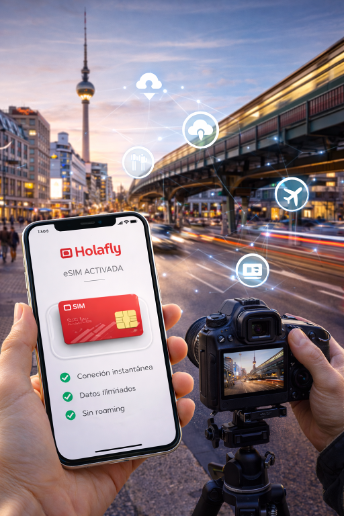
There’s something about Germany that feels made to be observed through a lens.
Not just photographed—but studied, followed, and experienced frame by frame.
It’s a country of contrasts: old and new, stillness and movement, precision and spontaneity. And for anyone drawn to visual storytelling—whether through photography, video, or timelapse—it offers an endless sequence of moments waiting to be captured.
But what makes Germany truly compelling isn’t just what you see.
It’s how it moves.
The rhythm of German cities
Every city has its own pace. In Germany, that rhythm is unmistakable.
In Berlin, it’s fast, layered, unpredictable. Graffiti-covered walls sit beside modern glass structures. Cyclists weave through traffic. People move with purpose—but not always in the same direction.
In Munich, the rhythm softens. There’s structure, yes—but also space. Open squares, quiet streets, moments that stretch longer than expected.
Hamburg brings something different again. Water, reflections, industrial edges softened by light. Movement here feels fluid, almost cinematic.
For a visual creator, these differences aren’t just aesthetic—they’re narrative.
Each city tells its own story. You just have to follow it.
Light, architecture, and contrast
Germany’s architecture offers a unique canvas for visual exploration.
Medieval buildings stand next to post-war modernism. Clean lines intersect with intricate details. Glass reflects stone. Steel meets history.
And then there’s the light.
Early mornings bring a softness that wraps around buildings, creating long shadows and quiet scenes. Midday sharpens everything—contrast becomes stronger, textures more defined.
But it’s the golden hour that transforms everything.
Warm tones spread across city streets, turning ordinary moments into something cinematic. Reflections deepen. Movement slows, even if only visually.
This is when the city feels most alive—and most still—at the same time.
Capturing movement in transit
Some of the most interesting moments in Germany happen between destinations.
On trains, for example.
The country’s rail system is one of the most efficient in the world, but for a creator, it’s also a moving frame. Landscapes shift continuously—fields, forests, small towns passing by in a blur.
It’s the perfect environment for timelapse.
Inside stations, movement becomes more structured. People arriving, departing, waiting. Patterns emerge. Repetition becomes visible.
These are the moments that often go unnoticed by casual travelers—but through a lens, they become something else entirely.
The art of slowing down to see more
Ironically, capturing movement requires stillness.
To notice patterns, you have to pause. To frame a shot, you have to step back. To understand a space, you have to spend time in it.
Germany rewards that approach.
Sit in a café and watch how the light changes over an hour. Stand on a street corner and observe how people move through it. Wait for the moment when everything aligns—the right subject, the right light, the right timing.
That’s where the magic happens.
Not in rushing from place to place, but in staying long enough to see.
Creating while traveling
For photographers and visual creators, travel is not just about experiencing a place—it’s about translating that experience into something tangible.
That means capturing, reviewing, editing, and sometimes sharing—all while still on the move.
It’s a process that blends creativity with practicality.
You need to:
- Find locations
- Adjust plans based on light and weather
- Store and manage your work
- Stay organized across different environments
And increasingly, you need to do all of this in real time.
The tools behind the scenes
While the final image might feel effortless, the process behind it rarely is.
Modern creators rely on a combination of tools—cameras, editing software, storage solutions, and yes, connectivity.
Being able to check maps, research locations, upload content, or communicate with collaborators can make a significant difference in how smoothly a project unfolds.
For photographers constantly on the move, having reliable connectivity matters. Tools like Holafly’s esim in Germany make it easier to navigate, upload, and work without interruption.
It’s not something you think about when everything works.
But when it doesn’t, it becomes impossible to ignore.
Between moments and meaning
Photography is often described as capturing a moment.
But in reality, it’s about capturing meaning.
A single frame can hold layers—movement, emotion, context, contrast. And in a place like Germany, those layers are everywhere.
A quiet street at dawn.
A crowded station at rush hour.
A reflection in a window.
Each image becomes part of a larger story.
And as a creator, you’re constantly deciding what to include—and what to leave out.
What you take with you
When you travel with a camera, you don’t just return with photos.
You return with a different way of seeing.
You start to notice light more consciously. You pay attention to movement, composition, timing. Even after the trip ends, that perspective stays with you.
Germany, with its balance of structure and unpredictability, has a way of sharpening that awareness.
It teaches you to look closer. To wait longer. To see more.


