Design Decisions That Save (and Cost) You Money: HVAC, Envelope, and Renewables Tradeoffs for Net‑Zero Homes
Highlights:
- Invest in the building envelope first — a Passive House-grade envelope can shrink your required solar array by 30–50%, saving $12,000–$15,000 in panel costs alone.
- Right-sizing HVAC to your actual modeled loads (not code defaults) prevents costly oversizing, reduces equipment spend, and improves long-term efficiency.
- Solar savings in 2026 range from ~$960 to $3,200/year depending on your state’s electricity rate — geography matters more than most homeowners realize.
- The 30% federal residential solar tax credit expired end of 2025; state incentives and system sizing strategy are now the primary financial levers.
- Budget sequencing matters as much as budget size — envelope → load modeling → HVAC sizing → solar array is the order that consistently produces the lowest total system cost.
Building a net-zero home in 2026 isn’t just a sustainability goal — it’s a full-blown financial puzzle. Every design decision ripples through your budget, your energy bills, and your long-term return on investment. Choose wisely, and your home practically pays for itself over time. Choose poorly, and you’ve sunk tens of thousands of dollars into systems that don’t play well together.
The tricky part? These decisions aren’t made in a vacuum. Your HVAC system depends on your envelope. Your solar array depends on both. Getting any one of those variables wrong throws off the whole equation. Let’s unpack where the real money is made and lost — and what the 2026 data actually tells us.
The Envelope Comes First — Always

Here’s the principle that high-performance builders live by: you can’t throw solar panels at a leaky house and call it net zero. The building envelope — your walls, roof, windows, and air barrier — is the foundation that everything else sits on. Invest in it early, and every other system in the house gets cheaper.
A Passive House-certified envelope, for example, reduces heating and cooling demand so dramatically that the solar array needed to close the annual energy gap shrinks by 30 to 50 percent compared to a conventionally built home. That’s not a marginal difference. On a typical net-zero build, where solar can represent $25,000 to $30,000 of your budget, cutting that array size in half could save you $12,000 to $15,000 in panels alone — before you account for reduced inverter sizing, fewer roof penetrations, and a simpler electrical design.
The mechanism here is straightforward building science. A tight, well-insulated envelope flattens out the peaks in your heating and cooling load. When those peaks are smaller, your HVAC equipment can be downsized. Smaller equipment means lower upfront cost, less maintenance, and longer service life. The envelope premium you pay on the front end — typically thicker wall assemblies, triple-pane windows, and meticulous air sealing — essentially gets paid back by every other system it allows you to shrink.
Where builders go wrong is treating the envelope as a line item to be value-engineered when the budget gets tight. That’s exactly backwards. Skimping on insulation to save $8,000 during construction often means installing a larger HVAC system, a bigger solar array, and living with higher utility bills for the life of the building. The savings you think you’re capturing disappear fast.
HVAC: Right-Sizing Is More Important Than Equipment Selection
Once you have a high-performance envelope, your HVAC system needs to be selected and sized to match it — not the other way around. This is where a lot of well-intentioned net-zero projects go sideways.
The instinct is to install the most efficient equipment available and assume it will perform. But an oversized heat pump in a tight house cycles on and off too frequently, runs in short bursts that never allow it to reach optimal efficiency, and creates humidity control problems in mixed-climate zones. Undersized equipment, on the other hand, struggles on the rare design-day extremes and wears out faster. Neither scenario gives you the energy performance you modeled.
The best HVAC decisions for net-zero homes follow a load-first sequence: model the building’s heating and cooling loads after the envelope is fully specified, then select equipment sized to those modeled loads. In a Passive House-equivalent build, that often means a surprisingly small heat pump — sometimes a single mini-split per zone rather than a whole-home ducted system. The equipment cost drops significantly, and the system runs in longer, more efficient cycles because the load it’s serving is small and steady.
Mechanical ventilation is the piece most homeowners don’t think about until it’s too late. In an airtight house, you need a mechanical ventilation strategy — typically a heat recovery ventilator (HRV) or energy recovery ventilator (ERV) — to maintain indoor air quality without hemorrhaging conditioned air. This adds cost, but it’s non-negotiable in a tight envelope. The good news is that a properly sized HRV or ERV also reduces the effective load on your space conditioning equipment, so it pays back through system downsizing as well as energy savings.
The hidden cost that catches builders off guard is duct design in net-zero homes. If you’re using a ducted system, duct losses in unconditioned spaces can represent 20 to 30 percent of your system’s total energy use. Either bring your ducts inside the conditioned envelope — which affects your framing and insulation sequencing — or use ductless equipment and eliminate the problem entirely. Neither option is free, but both are cheaper than ignoring the issue.
What Solar Actually Pencils Out to in 2026
Let’s talk numbers, because the renewable side of this equation has shifted significantly compared to even two years ago.
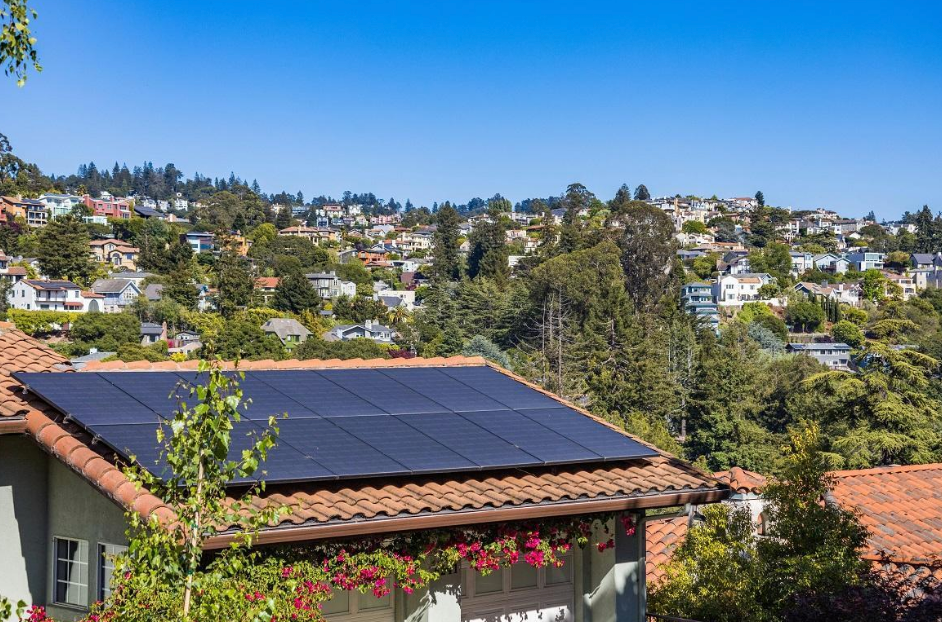
The 30% federal residential solar tax credit expired at the end of 2025. That’s a meaningful change for homeowners buying systems outright in 2026, and it’s worth building into your pro forma honestly rather than assuming the incentive landscape from prior years still applies. That said, the long-term financial case for solar in a net-zero home remains strong — particularly when you’ve already done the envelope and HVAC work that reduces your array size requirements.
According to 2026 NREL data analyzed by Green Energy Calculators, the typical U.S. homeowner with solar saves between $1,400 and $2,000 per year on electricity — but that range masks enormous geographic variation. Hawaii homeowners with an 8 kW system are saving roughly $3,200 annually, while Louisiana homeowners with the same setup are closer to $960 per year. The driver is almost entirely your local electricity rate: in high-rate states, solar is a no-brainer even without the federal credit. In low-rate states, the math is thinner and the payback period stretches out.
Here’s where the envelope-first strategy pays a second dividend. If a Passive House-grade envelope cuts your required solar array by 30 to 50 percent, you’re not just saving on panel costs — you’re also compressing your payback period, because a smaller system reaches break-even faster on the savings it does generate. A homeowner in Massachusetts who needs a 6 kW system instead of a 10 kW system is looking at a payback period several years shorter, even without the federal tax credit.
For a deeper look at where these upfront investments actually show up in your total project budget — and which line items tend to surprise first-time net-zero builders — the breakdown of true net-zero construction costs in 2026 is worth reading before you finalize any design decisions.
The Tradeoffs Nobody Tells You About
Every net-zero home is a system optimization problem, and the tradeoffs look different depending on your climate zone, your lot, and your budget sequence.
Envelope vs. Renewables:
In a cold climate like the upper Midwest or New England, front-loading money into envelope performance is almost always the right call. Heating loads dominate, and a tight envelope dramatically reduces them. In a mild climate like the Pacific Northwest, where heating loads are already modest, the returns on envelope upgrades beyond a certain threshold diminish. The marginal dollar might do more work as solar capacity than as an extra inch of wall insulation.
Geothermal vs. Air-Source Heat Pumps:
Ground-source geothermal systems can reach efficiencies that air-source heat pumps can’t match in extreme cold — particularly relevant in climate zones 6 and 7. But the installation cost premium is substantial: expect to pay $10,000 to $20,000 more for a ground loop compared to an air-source system of equivalent capacity. For most net-zero homes in climate zones 4 and 5, a well-specified cold-climate air-source heat pump closes the performance gap enough that geothermal is hard to justify on the numbers alone.
Battery Storage:
Adding battery storage to a solar system improves resilience and can increase self-consumption — useful in states with unfavorable net metering — but it adds $8,000 to $15,000 to the project and extends your payback period. In states with strong net metering, storage is largely an insurance product rather than a financial optimizer in 2026. In states where utilities have moved to reduced export rates, the calculus is changing.
Sequencing Your Budget for Maximum Return
If there’s one practical takeaway from all of this, it’s that the order in which you invest matters as much as the total amount you invest.
Start with the envelope. Get your airtightness and insulation right before you size anything mechanical. Then model your loads with the actual envelope performance, not generic code minimums. Size your HVAC to those modeled loads. Finally, size your solar array to cover the net annual electricity consumption that results from the efficient envelope and right-sized mechanical systems.
This sequence consistently produces smaller, cheaper systems at every step — and it’s the reason that high-performance builders talk about net-zero homes as a design discipline rather than a technology checklist. The technology is available and increasingly affordable. The design sequencing is what separates the projects that deliver on their energy promises from the ones that fall short on opening day.
The financial case for net-zero in 2026 is real, but it’s built on decisions made at the drawing board, not the equipment catalog. Nail the envelope, right-size the HVAC, and let the solar array do the work of closing the gap — not the work of compensating for a leaky, oversized-load house underneath it.