Affordable Laser Systems for Small Businesses: What You Can Get Under $5,000
Laser equipment has crossed an accessibility threshold. Machines that required $20,000 or more a decade ago have capable alternatives under $5,000. For small businesses evaluating laser technology, the question is no longer whether it is accessible. It is which type fits your use case and production requirements.
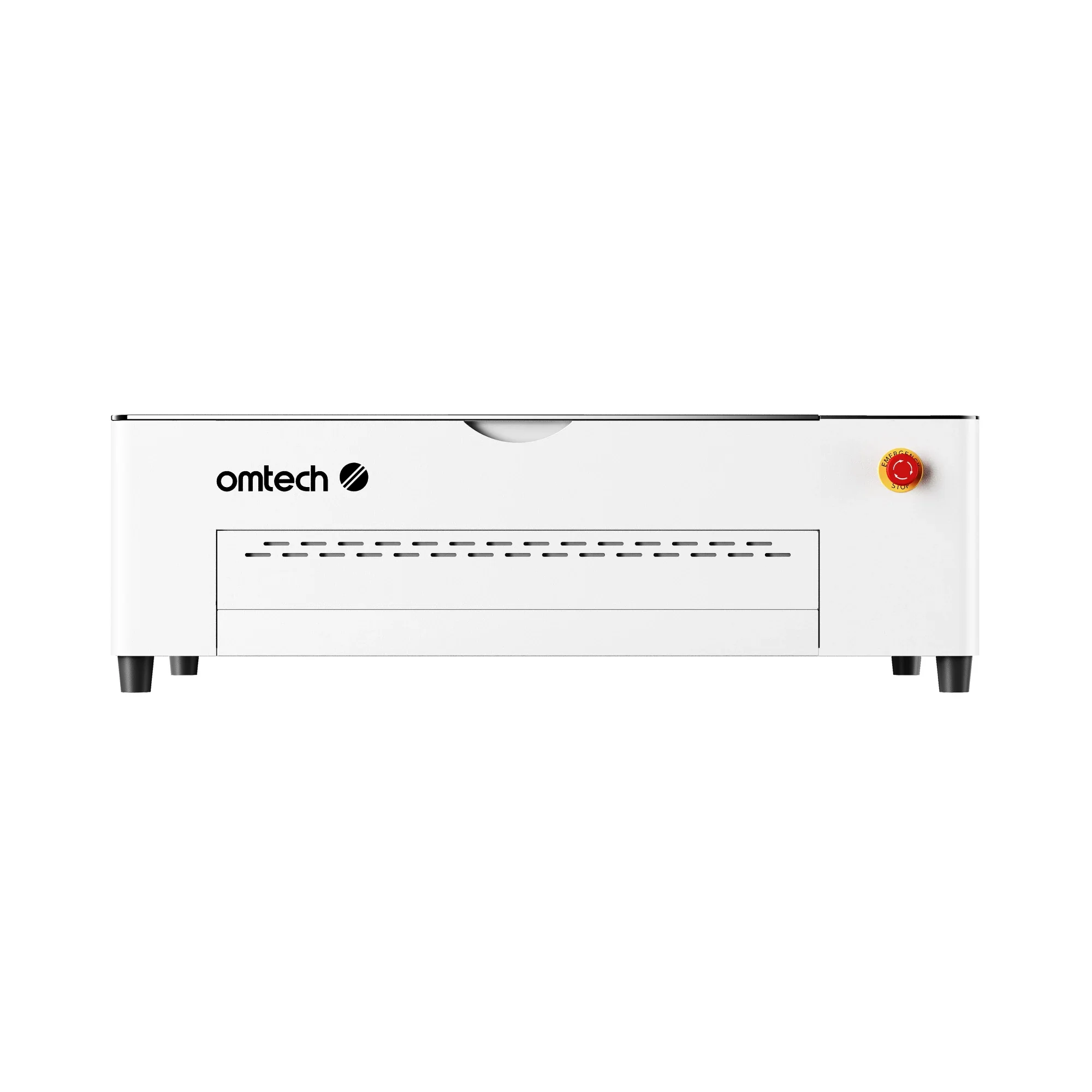
This guide breaks down what is realistic at each price point under $5,000 and what the limitations are. OMTech offers a full range of affordable CO2 and fiber laser systems built for small business and production use.
Why Laser Equipment Has Become Affordable
Three factors have driven the price reduction without reducing core capability:
- Manufacturing scale: Chinese production volume has reduced component costs across the laser supply chain
- Fiber source maturity: Diode pump technology for fiber lasers has become a commodity component
- Control system standardization: Galvo scanning systems and laser controllers are now widely available components
The result is laser capability at price points accessible to small businesses, sole operators, and home workshop production.
What You Get at Each Price Point
Under $1,500 — Testing and Learning
- Entry-level diode laser engravers and basic CO2 machines
- Suitable for testing a business concept or learning laser operation
- Diode machines handle wood, leather, and some coated metals at modest speeds
- Cannot cut clear acrylic. Open-frame designs require more active safety management
- Not recommended for consistent business production due to speed and quality limitations
$1,500 to $3,000 — Entry Production
- 40W to 60W CO2 laser engravers with enclosed designs and LightBurn compatibility
- Handle wood, acrylic, leather, and most non-metal materials at usable production speeds
- Work areas of around 16 by 24 inches cover most small product categories
- 40W limits cutting on material over 6mm. 60W provides more flexibility
- Practical entry point for small businesses in gift products, signage, and craft production
$3,000 to $5,000 — Small Business Production
- 60W to 80W CO2 machines with 20+ by 28+ inch work areas. Affordable laser engraving machines at this level handle real production volumes
- Compact fiber laser markers at 20W to 30W for permanent metal marking
- Both CO2 and fiber options at this price point support consistent business use without entry-level limitations
- Autofocus, higher duty cycles, and better build quality compared to entry-tier machines
CO2 vs Fiber: Which Affordable System Fits Your Business
Choose CO2 if your business centers on:
- Wood engraving and cutting for gifts, signs, and home decor
- Acrylic cutting and engraving for awards, signage, and display
- Leather goods, fabric cutting, and mixed non-metal material work
- Gift and personalization products for Etsy, craft fairs, and local retail
Choose fiber if your business centers on:
- Metal part marking for industrial, automotive, or electronics applications
- Jewelry personalization and precious metal engraving
- Tool and hardware identification with permanent traceability marks
- Contract marking services for local manufacturers and machine shops
What to Budget Beyond the Machine Price
The machine purchase is the largest cost but not the only one. Plan for:
- Ventilation setup: $150 to $400. Required for every laser system
- Water chiller for CO2: $200 to $500. Required for sustained production use
- Rotary attachment: $80 to $200. Required for tumbler and cylindrical engraving
- Honeycomb work table: $50 to $150. Improves cut quality on flat material
- Air assist upgrade: $60 to $150. Better cut edge quality on wood and acrylic
- Initial material inventory: $200 to $500 depending on product type
A realistic all-in startup budget for a small production CO2 setup runs $3,500 to $6,500. Fiber laser marking setups in the same production capability range run $3,500 to $6,000.
How Small Businesses Calculate Payback
Two payback calculation methods apply depending on your situation:
Outsourcing Replacement
- Calculate current annual spend on outsourced engraving, cutting, or marking services
- Divide total machine and setup cost by annual outsourcing spend
- Most shops with $300 or more per month in outsourcing see payback in under 18 months
- Ongoing operating cost of the laser (electricity plus tube replacement for CO2) is typically a fraction of outsourcing cost
New Revenue Generation
- Identify the product or service the laser enables that you cannot currently offer
- Estimate conservative first-year revenue from that capability at realistic volume
- Calculate payback against total setup cost at that revenue rate
- New revenue payback periods are typically longer than outsourcing replacement but generate ongoing revenue benefit
Top Buying Mistakes to Avoid
- Buying on machine price alone without budgeting for ventilation and accessories
- Choosing a work area that is too small for the products you actually want to make
- Buying 40W when 60W or 80W would eliminate production constraints at small additional cost
- Choosing a CO2 machine when your primary use is metal marking — the wrong technology for that job
- Skipping the water chiller and burning out a laser tube in the first production season